The Damuji wreck is one of the most unusual shallow dive sites near Varadero, Cuba. Located along the coast of Matanzas near Carboneras, the site combines the remains of a historic ship with a living coral reef.
Unlike a classic wreck where divers explore a largely intact vessel, the Damuji wreck is now scattered across the reef. Its propeller, boiler, anchors and other remains are incorporated into the underwater landscape, surrounded by coral formations and Caribbean marine life.
For divers interested in history, marine life and shore diving, the Damuji offers something different from a conventional reef dive.
At a Glance
| Feature | Damuji Wreck |
| 📍Location | Carbonera, Matanzas, Cuba |
| ⏱From Varadero / Matanzas | Approximately 20 km / 30 minutes by road |
| 🌊Access | Mainly from the shore; boat access is possible but less practical |
| ⚓️🐚Type of dive | Shallow wreck and reef dive |
| 🏝Starting depth | Approximately 3 m |
| ❊Main Damuji wreck remains | Propeller, boiler, anchors and scattered ship remains |
| 🕵️♀️Maximum depth | Approximately 12 m |
| ⏳Typical dive time | 35-40 minutes |
| ⚓️🐠Dive options | Damuji only, or Damuji followed by Playa Coral |
| 🦀Marine life | Tropical reef fish, corals, sponges and other Caribbean species |
| 🦑Special feature | Historic wreck remains combined with a coral wall |
| ✔︎Experience | Suitable for certified divers; entry requires attention to sea conditions |
Depth, duration and route can vary depending on the diver, air consumption, sea conditions and the dive plan.
The History of the Río Damují
The wreck known today as the Damuji was originally the Río Damují, a working vessel that operated in Cuban waters.
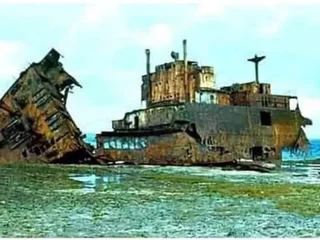
On February 3, 1970, the ship ran aground on the northern coast of Matanzas. The crew survived the incident, but the vessel was never returned to service. Local historical accounts place the grounding in the area between Playa Maya and Boca de Camarioca, near Carboneras.
For a period of time, the ship remained above the water and could be seen from the coastal road. It was a very different landscape from the one divers encounter today.
Local historical accounts place the grounding of the Río Damují in the area near Carboneras on February 3, 1970. Historical records of the Río Damují provide additional details about the vessel and its final journey.
What Happened to the Ship?
After the grounding, the vessel gradually deteriorated.
Some parts were removed over the years, while other sections eventually collapsed onto the seabed. What remains today is not a complete ship standing upright, but a collection of wreck remains spread across the reef.
The sea has also transformed those remains. Metal structures have become part of the underwater environment, while coral and other marine organisms have colonized the surrounding area.
This gives the Damuji its particular character: part historical wreck, part coral reef.
What Remains of the Damuji Wreck Today?
Today, the Damuji wreck is a shallow dive site where divers can find several recognizable elements of the former ship.
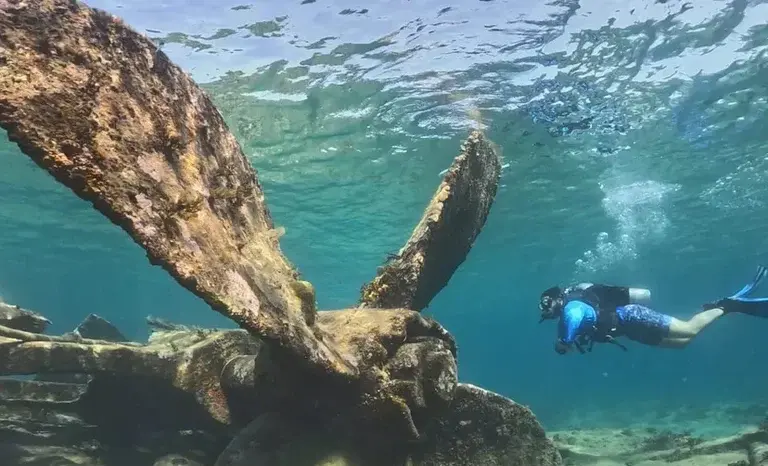
The dive begins at approximately 3 meters, where the propeller and boiler can be found around 3-5 meters of depth.
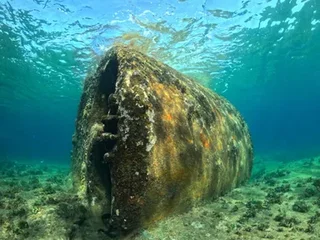
From there, the route continues across the reef toward a small coral wall. Along the way, divers encounter the anchors and other scattered remains of the vessel.
Rather than following the outline of an intact ship, the dive becomes an exploration of the area looking for pieces of the Damuji among the coral formations and marine life.
This is one of the reasons the site is particularly interesting for underwater photography. The combination of old metal, coral, shallow blue water and marine life creates many different subjects within a relatively small area.
The Damuji Wreck Dive
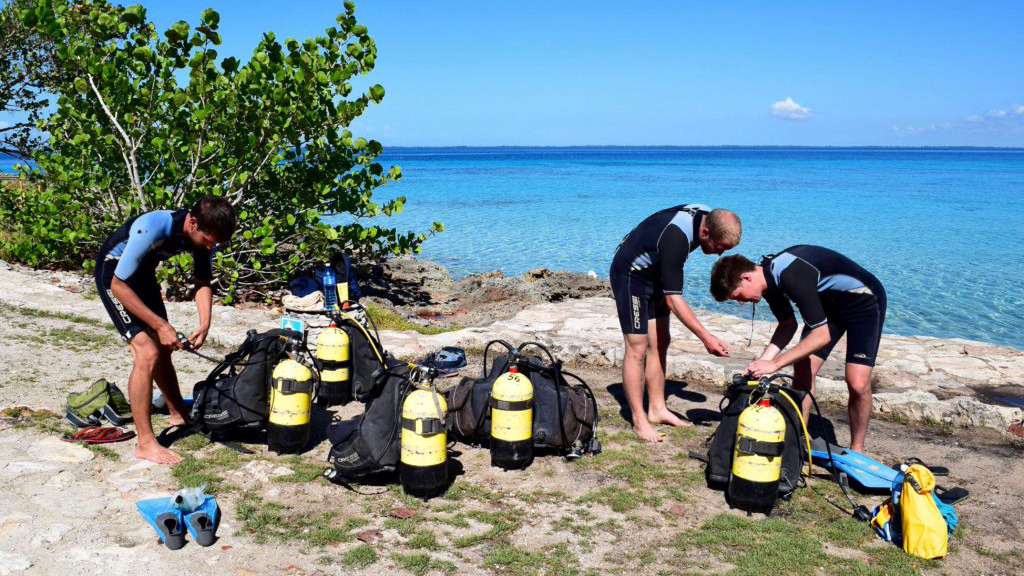
The Damuji is primarily accessed from the shore.
This is one of the practical advantages of reaching the site by road from Varadero. Although the wreck can technically be reached by boat, traveling from the marinas takes considerably longer than reaching the area by land.
However, shore access here is different from entering the water at a conventional sandy beach.
Getting Into the Water
The entrance is over a rocky shoreline, so sea conditions need to be taken into account.
Divers should use appropriate dive boots or dedicated fins designed to be used with diving footwear. Scuba Vida can provide suitable footwear when a diver does not have their own.
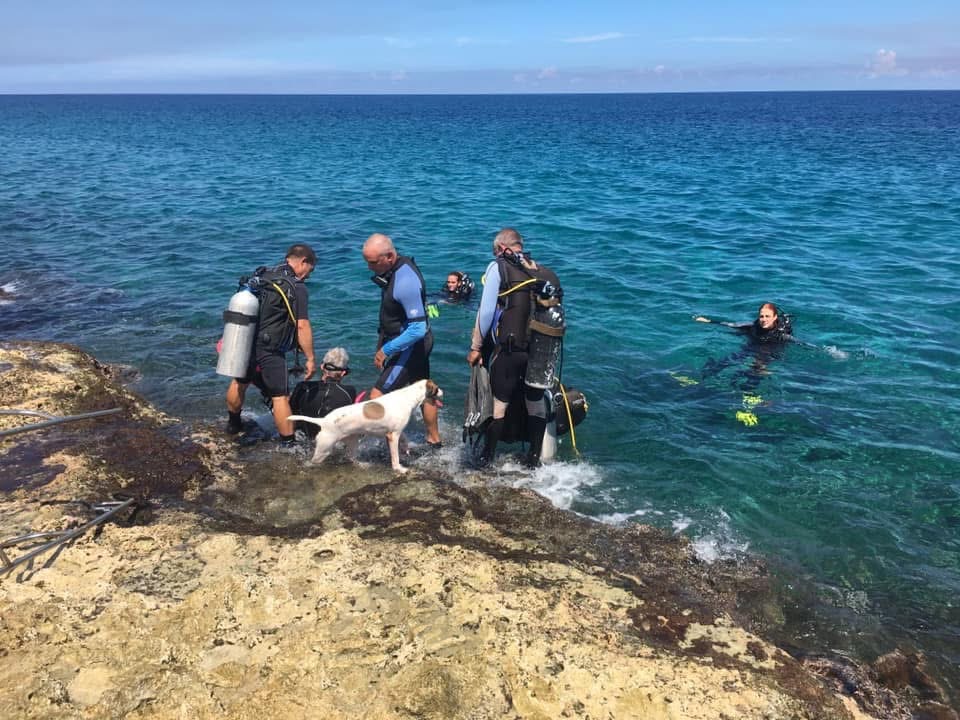
The rocky ledge is approximately at water level, and entry is normally made with a giant stride or a backward entry assisted by the instructor, depending on the conditions and the diver.
Because the site does not have a conventional sandy beach entry, the instructor will assess the conditions and assist divers with the safest way to enter the water.
Once underwater, the shallow depth makes it possible to begin the dive almost immediately.
What Depths Can You Expect?
The Damuji is a shallow dive, with a maximum depth of approximately 12 meters.
The first part of the dive is particularly shallow:
- Around 3 meters: the dive begins in very shallow water.
- Around 3–5 meters: divers can encounter the propeller and boiler.
- Further along the route: the dive continues toward the coral wall, anchors and scattered wreck remains.
- Maximum depth: approximately 12 meters.
The shallow profile makes the site accessible to recreational divers, while the combination of wreck remains and reef formations gives experienced divers plenty to explore.
As always, the exact route depends on conditions, experience and the diver’s air consumption.
Exploring the Wreck and Coral Wall
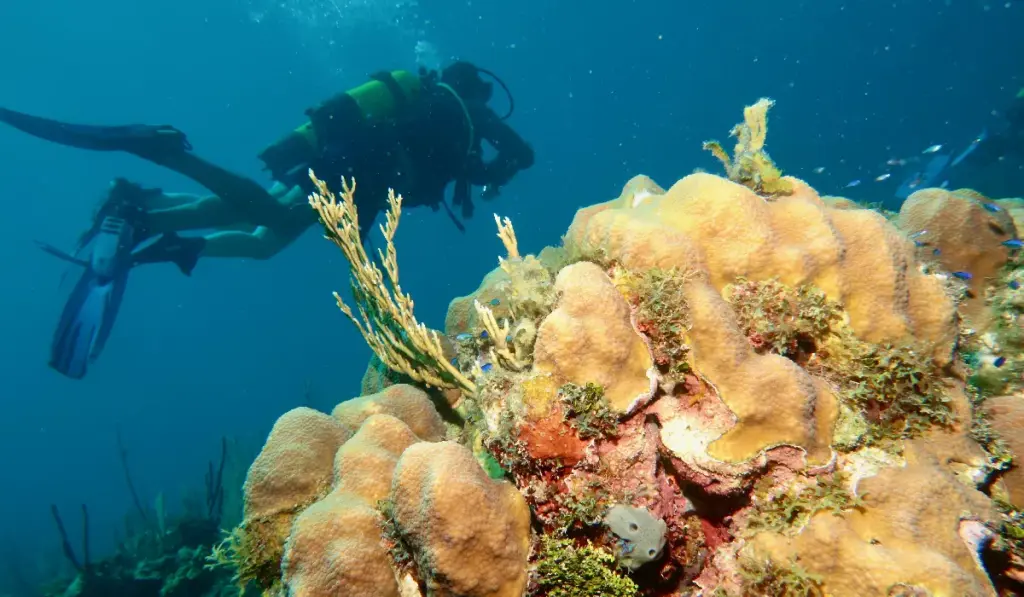
One of the most interesting aspects of the Damuji is the transition between the wreck and the reef.
The remains are scattered rather than concentrated in one intact structure. Divers can move between sections of the old vessel and the surrounding coral formations before reaching the small coral wall.
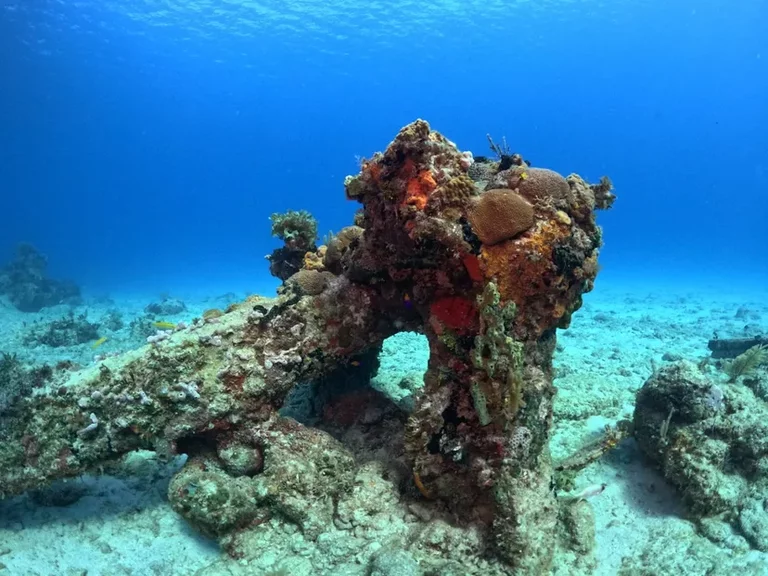
The anchors and other recognizable parts of the ship provide a connection to the history of the site, while the coral formations show how the underwater environment has changed the wreck over time.
The wall also adds a different sense of relief to the dive compared with the shallower sections around the propeller and boiler.
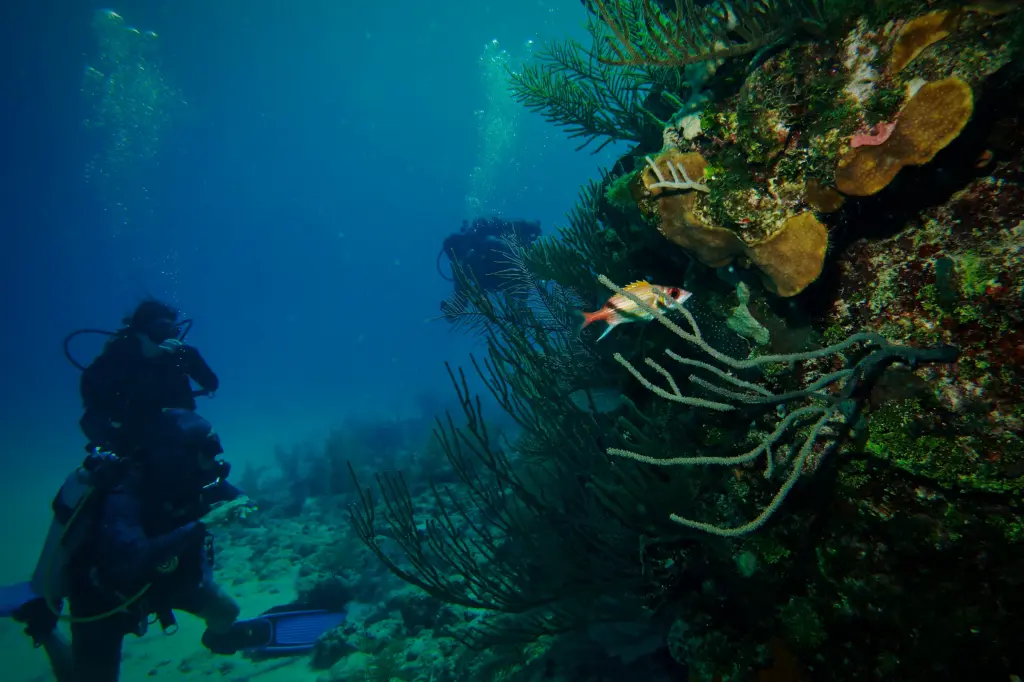
For photographers, this creates opportunities to combine wreck textures, coral formations and marine life in the same dive.
Exploring the Damuji Wreck in Cuba and Coral Wall
One of the most interesting aspects of the Damuji is the transition between the wreck and the reef.
The remains are scattered rather than concentrated in one intact structure. Divers can move between sections of the old vessel and the surrounding coral formations before reaching the small coral wall.
The wall also adds a different sense of relief to the dive compared with the shallower sections around the propeller and boiler.
For photographers, this creates opportunities to combine wreck textures, coral formations and marine life in the same dive.
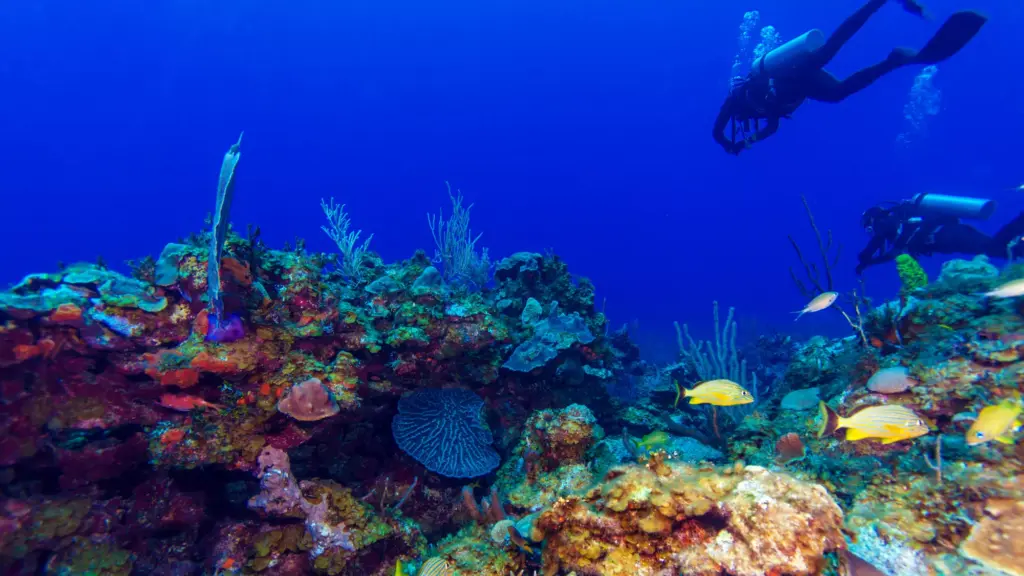
Marine Life Around the Damuji
The marine life around the Damuji is similar to what divers can encounter at Playa Coral.
The difference is the underwater environment. At the Damuji wreck in Cuba, reef life is associated with the scattered wreck remains and a coral wall, creating a slightly different atmosphere even when many of the same species are present.
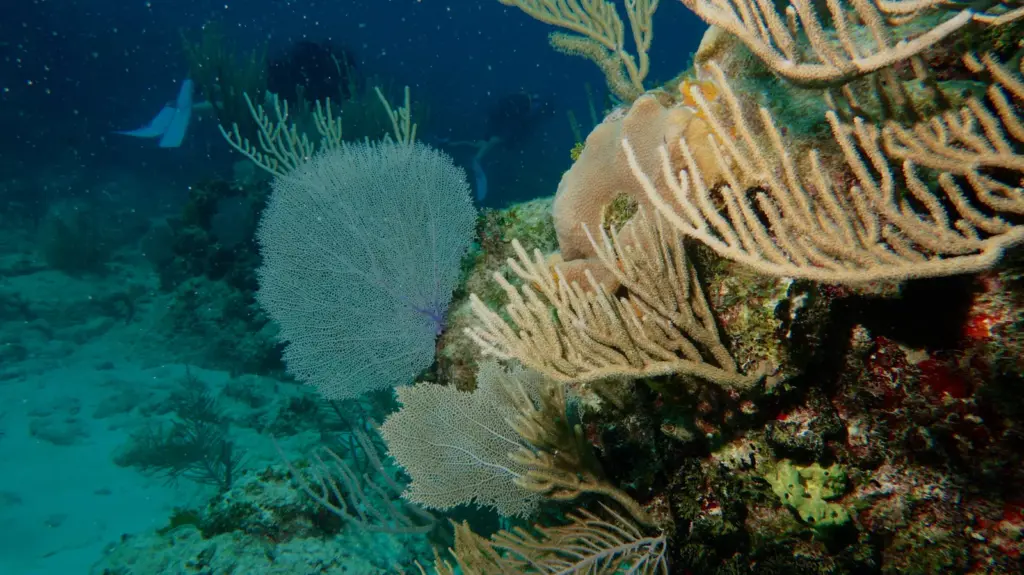
Depending on the conditions and route, divers may encounter:
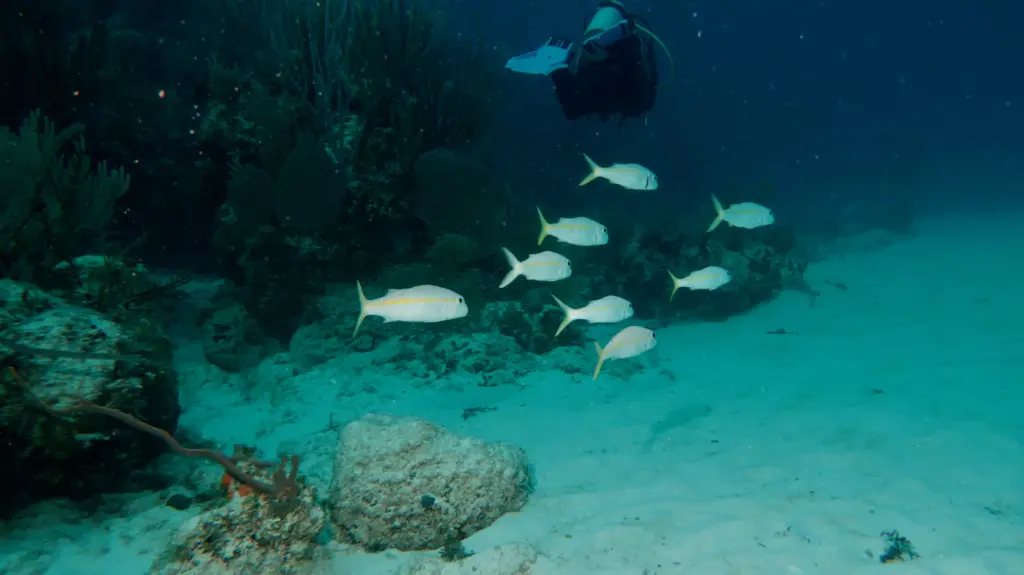
- Tropical reef fish
- Parrotfish
- Doctor fish
- Chopa
- Yellow snapper
- Butterflyfish
- Isabelitas
- Barracuda
- Moray eels
- Sponges and different coral formations
- Smaller reef creatures hiding among the coral and wreck remains
The shallow water and relatively varied structure also make the site interesting for divers who enjoy looking closely at the reef rather than simply covering distance.
Why Divers Love the Damuji
The Damuji combines several things that are rarely found together in such shallow water.
A Piece of Cuban Maritime History
The wreck has a story that goes beyond what divers can see underwater. The old photograph of the vessel above the surface provides a glimpse of how dramatically the site has changed.
Shallow Diving
With a maximum depth of around 12 meters, the Damuji does not require a deep wreck profile to be interesting.
Wreck and Reef in One Dive
The remains of the ship have become part of the reef environment. Divers can move from the propeller and boiler to anchors, scattered wreckage and coral formations.
A Different Experience from a Boat Wreck
Because the site can be reached from the coast, the experience is different from a traditional boat-based wreck excursion.
Damuji Wreck + Playa Coral
The Damuji can be done as a single dive or as the first dive of a day that continues at Playa Coral.
Combining the two Dive sites is particularly interesting because they offer contrasting underwater environments in the same general area.
At the Damuji, divers explore:
Historic wreck remains → shallow reef → coral wall → marine life
At Playa Coral, the focus shifts more toward:
Coral formations → reef fish → shallow reef exploration → snorkeling and diving
The combination creates a varied diving day without needing a long boat journey.
Safety Around the Damuji
Although the Damuji is shallow, it should not be treated as a casual dive.
The coastal entrance is rocky and can be affected by waves, so conditions should be evaluated before entering the water.
Underwater, the wreck remains include metal structures and sections that have deteriorated over time.
For this reason:
- Follow the instructions of your local dive guide.
- Do not enter collapsed or unstable sections.
- Avoid contact with sharp metal.
- Do not attempt penetration of the wreck.
- Be aware of your equipment around entanglement hazards.
- Do not touch, remove or collect pieces of the wreck or marine life.
- Allow the instructor to determine the safest shore-entry method according to conditions.
The current Scuba Vida dive information also emphasizes the presence of sharp metal and partially collapsed sections and recommends avoiding penetration.
Local Insight from Scuba Vida
The Damuji wreck in Cuba is a good example of how a dive site can change completely over time.
Years ago, the ship was visible above the surface and could be seen from the road. Today, that part of the landscape has disappeared, and divers encounter what remains beneath the water: the propeller, boiler, anchors and scattered sections of the vessel integrated into the reef.
What makes the dive special is not the size or depth of the wreck. It is the opportunity to see how history, metal and coral have gradually become part of the same underwater environment.
And because the site is shallow, divers can take their time observing the details rather than simply following a deep wreck profile.
Responsible Wreck Diving
Wrecks are underwater historical sites as well as habitats for marine life.
At the Damuji wreck in Cuba, responsible diving means leaving the site exactly as you find it.
Do not collect metal, artifacts or marine organisms. Avoid touching coral and keep your equipment controlled so that fins, gauges and other gear do not damage the reef.
The best way to preserve a site like the Damuji is to allow the wreck and the reef to continue their natural transformation.
Plan Your Damuji Wreck Dive
The Damuji is located in the Carboneras area of Matanzas, approximately 20 km from Varadero, making it a practical excursion by road.
Before planning your dive, it is also useful to understand the different seasons and diving conditions in Cuba. Read our guide to the Best Time of Year to Dive in Cuba.
Scuba Vida can organize the dive with transportation, equipment and a certified local guide.
Before the dive, the team will explain the route, entry procedure and conditions. This is particularly important at Damuji because the shore entry is rocky rather than sandy.
The dive normally lasts around 35–40 minutes, depending on the diver’s air consumption and the conditions.
You can choose to make Damuji as a single dive or combine it with a second dive at Playa Coral.
Scuba Vida offers guided diving at the Damuji Wreck near Varadero, with transportation, equipment and a certified local guide.
A Wreck Worth Exploring
The Damuji is not the largest or deepest wreck in Cuba.
That is not what makes it interesting.
Its appeal comes from the combination of history, shallow diving, shore access, coral formations and marine life.
The ship that once stood above the surface has gradually become part of the underwater reef. Today, divers can explore its remaining propeller, boiler, anchors and scattered sections while surrounded by the same Caribbean ecosystem that has slowly transformed the wreck.
For a diver interested in more than simply visiting an intact shipwreck, the Damuji wreck in CUba offers a different kind of experience a dive where the history of the vessel and the life of the reef have become part of the same story.
Related Articles

Explore the Damuji Wreck with Scuba Vida
Ready to explore one of the most unusual shallow wreck dives near Varadero?
Dive the Damuji, discover its history, and see how the Caribbean reef has transformed the remains of the Río Damují.
About Scuba Vida
Scuba Vida is a local dive center based near Varadero, offering scuba diving, snorkeling and guided underwater experiences in the area.
Our goal is to help divers discover Cuba’s reefs, marine life and underwater history while diving responsibly and respecting the ecosystems we explore.