The northern coast between Varadero and Matanzas offers much more than beautiful beaches.
Beyond the better-known dive sites, local divers know a collection of reef areas, shore dives and wreck sites where you can experience a quieter side of Cuba’s underwater world.
From coral formations and sandy channels to the scattered remains of a historic shipwreck, this stretch of coastline offers a variety of underwater environments within easy reach of Varadero.
At Scuba Vida, we regularly explore the waters between Varadero and Matanzas, selecting dive sites according to the conditions, diver experience and what our guests want to see.
Four sites and reef areas we particularly enjoy are Pinos de Camacho, El Cayuelo, the Damuji wreck and Playa Coral.
Each offers something different.
At a Glance
Dive site Best for Main attraction Typical experience
Pinos de Camacho Reef exploration Coral formations and reef fish Relaxed reef diving
El Cayuelo Marine-life lovers Reef structure and fish activity Scenic reef exploration
Damuji Wreck Wreck and reef divers Historic wreck remains Shallow wreck dive
Playa Coral Beginners, snorkelers and photographers Shallow coral reef Easy shore diving
The exact route, depth and conditions can vary depending on weather, sea state, visibility, diver experience and the day’s dive plan.
1. Pinos de Camacho, A Quiet Reef Worth Exploring
Perfect for: Scenic reef dives and divers who enjoy taking their time
Pinos de Camacho is the kind of dive site that rewards divers who slow down and look closely.
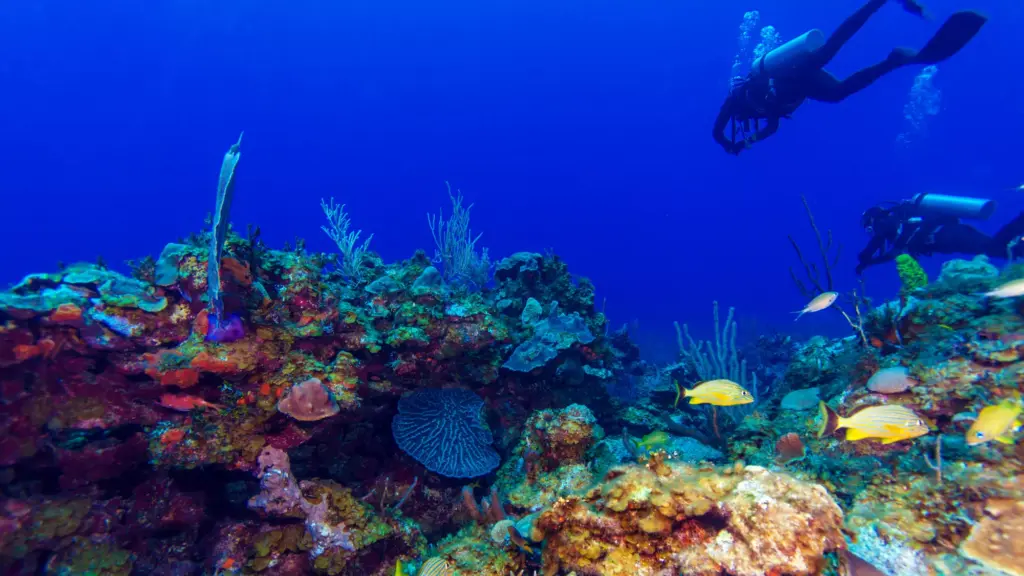
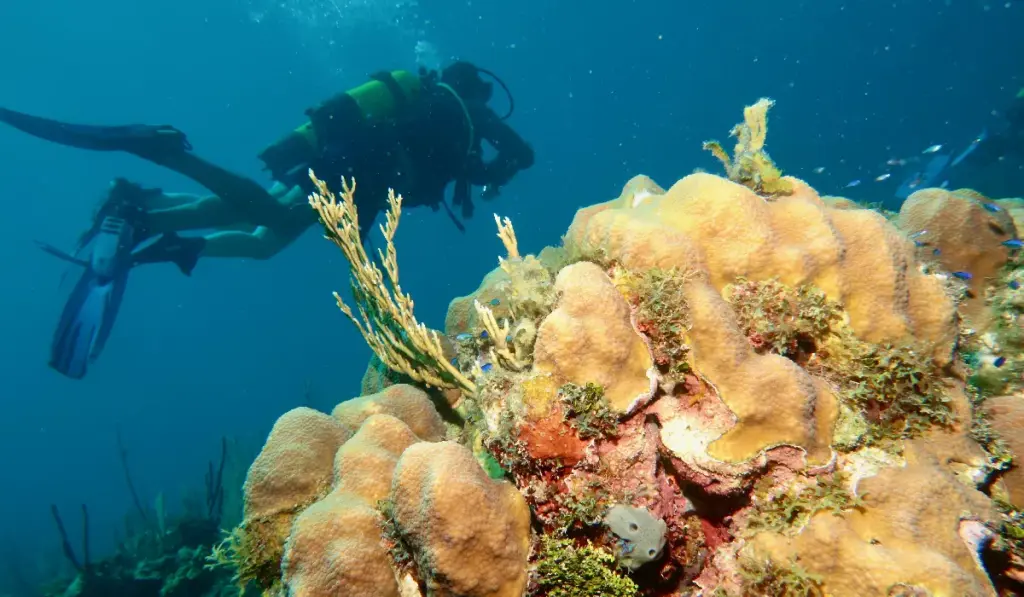
Rather than one dramatic underwater feature, the attraction is the reef itself: coral patches, sandy areas, rocky formations and small structures where marine life gathers.
As you explore the reef, you may encounter schools of grunts and snappers moving above the formations, while angelfish and parrotfish work their way through the reef.
Lobsters and smaller reef creatures can also be found hiding among crevices and coral structures.
What makes Pinos de Camacho special?
• Reef formations with sandy areas
• Coral heads and rocky structures
• Tropical reef fish
• Opportunities for close-up observation
• A quieter feeling than some of the more established dive locations
For photographers, this type of reef can be especially rewarding.
Instead of looking for one large subject, you can spend the dive discovering small details — a fish moving through coral, a lobster tucked into a crevice or the texture of the reef itself.
And sometimes that’s exactly what makes a dive memorable.
2. El Cayuelo, A Reef Full of Marine Life
Perfect for: Divers who enjoy marine-life encounters and reef exploration
El Cayuelo offers another perspective on the reefs between Varadero and Matanzas.
The underwater terrain includes coral formations, rocky areas and sandy channels that create different habitats across the reef.
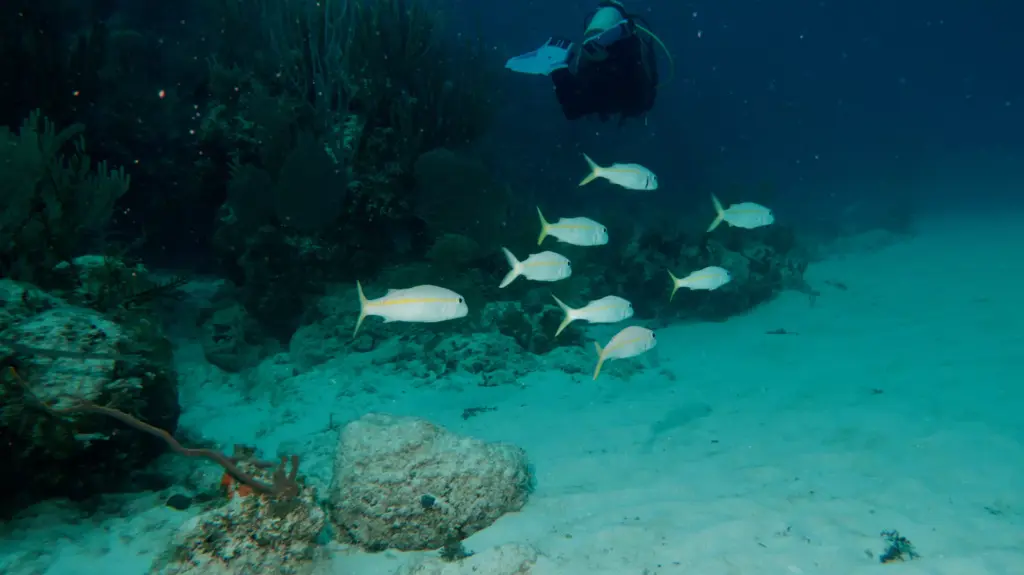
These structures attract a variety of tropical fish, with grunts and snappers often moving through the water above the reef.
Depending on the conditions and the day, you may also encounter groupers resting near the reef or rays passing across sandy areas.
Why explore El Cayuelo?
The combination of reef structure and marine life makes the site interesting for divers who enjoy looking rather than simply swimming from one point to another.
Move slowly.
Look underneath ledges.
Check the sandy patches.
Watch the blue water above the reef.
Some of the most interesting encounters can happen when you stop trying to find something and simply observe.
3. Damuji Wreck, History Meets the Reef
Perfect for: Certified divers, wreck enthusiasts and underwater photographers
Shipwrecks have a way of making a dive feel different.
You aren’t only exploring a reef. You’re looking at the remains of something that once had a completely different purpose.
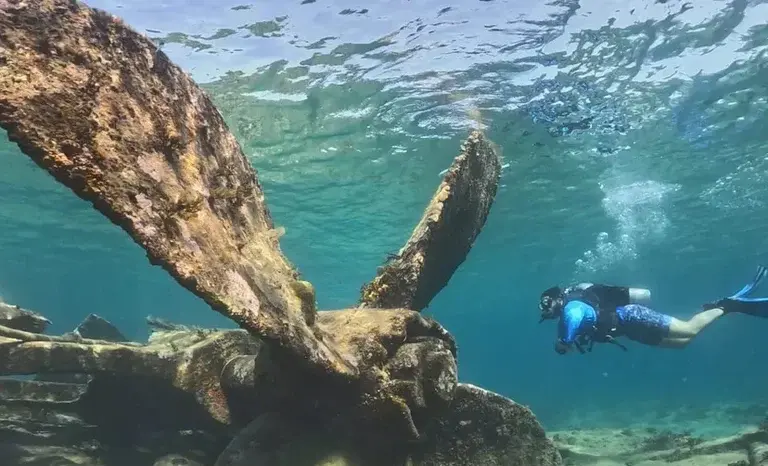
The Damuji, also known as the Río Damují, ran aground on the northern coast of Matanzas on February 3, 1970. The crew survived, and over the following decades the ship’s structure deteriorated and became increasingly integrated into the surrounding reef.
Today, the wreck is scattered rather than intact.
Parts of the hull, machinery and the distinctive propeller remain among the reef and sandy seabed.
The site is relatively shallow, with the remaining wreck structures found roughly between 5 and 12 meters.
What can you see?
• The propeller
• Scattered hull plates
• Parts of the machinery
• Coral growing around the wreck remains
• Sponges
• Tropical reef fish
• Small marine life hiding around the structure
• Schools of grunts and snappers
For underwater photographers, the combination of metal textures, coral growth and marine life makes the Damuji particularly interesting.
Important: This is not a penetration dive
The Damuji is a broken-up wreck with unstable and partially collapsed sections.
Do not enter the wreck.
Sharp metal and entanglement hazards are possible, so divers should remain outside the structure and follow the instructions of a local guide familiar with the site.
The Damuji is one of those dives where the history is important, but so is respecting what remains.
Read our complete guide: [Diving the Damuji Wreck: History, Marine Life & Shore Diving Near Varadero]
4. Playa Coral, One of the Most Accessible Reefs Near Varadero
Perfect for: Beginners, Discover Scuba, snorkelers and underwater photographers
If the other sites on this list represent quieter local exploration, Playa Coral is the easy-to-access reef that brings everything together.
Located between Varadero and Matanzas, Playa Coral offers reef access from shore, making it particularly convenient for both snorkeling and scuba diving.
The shallow reef environment contains coral formations, sandy areas, reef fish and channels that can be explored without needing a boat.
Scuba Vida’s local information places the reef’s commonly explored area from shallow water down to around 16 meters, with selected routes going deeper according to diver experience and conditions.
What can you see?
Depending on the route and conditions, marine life can include:
• Parrotfish
• Doctor fish and other surgeonfish
• Butterflyfish
• Angelfish
• Snappers
• Grunts
• Lobsters
• Other tropical reef species
The reef is also popular with underwater photographers because shallow water provides plenty of natural light.
For snorkelers, the same reef environment can be enjoyed from the surface.
For scuba divers, descending below the surface reveals another layer of the reef.
Read our complete guide: [Playa Coral Cuba: Snorkeling & Shore Diving Near Varadero]
Why Explore Beyond the Famous Dive Sites?
There is nothing wrong with diving the famous sites.
In fact, some of them deserve their reputation.
But one of the advantages of diving with a local team is that you don’t have to follow exactly the same itinerary every day.
Conditions matter.
Wind matters.
Sea state matters.
Visibility matters.
And perhaps most importantly, the people in the water matter.
A shallow reef that is perfect for one group may not be the best choice for another.
A certified diver looking for a quiet reef exploration may enjoy something completely different from a beginner experiencing scuba for the first time.
That’s where local knowledge becomes valuable.
Which Site Is Right for You?
 For a relaxed reef dive
Consider Pinos de Camacho.
It’s a good choice for divers who enjoy exploring reef formations at a slower pace.
 For marine-life observation
El Cayuelo can be particularly interesting if you enjoy watching fish move through different reef habitats.
 For history and wreck diving
Choose the Damuji if you’re interested in combining a shallow wreck with coral and marine life.
Remember: the wreck is fragmented and should not be penetrated.
 For beginners and snorkelers
Playa Coral is the obvious choice for many first-time visitors because of its easy shore access and shallow reef environment.
What Marine Life Can You See?
The northern coast around Varadero and Matanzas supports a wide range of Caribbean reef life.
Depending on the site and conditions, you may encounter:
- Parrotfish
 Grunts and snappers
- Angelfish
- Surgeonfish and doctor fish
 Trumpetfish
 Lobsters
 Moray eels
- Groupers
 Rays
Rays
You may also find smaller animals hiding in coral crevices and around wreck structures.
One of our favorite things about these sites is that you don’t always need large animals to have an interesting dive.
Look closely.
A small reef can contain an entire world.
Shore Diving Between Varadero and Matanzas
One of the biggest advantages of this coastline is the variety of shore-accessed diving.
Playa Coral is the clearest example, with the reef accessible directly from the coast.
The Damuji area can also be reached by road from Varadero, with the exact water entry depending on the dive plan and operator. Scuba Vida currently describes the Damuji as accessible by shore or boat depending on the excursion.
Shore diving can be particularly appealing for:
• Beginners
• Discover Scuba experiences
• Divers who prefer not to spend time on a boat
• Underwater photographers
• Divers who enjoy longer, relaxed dives
• Snorkelers traveling with scuba divers
But shore access doesn’t automatically mean easy access.
Rocky entries, waves and sea conditions can affect the entry and exit, so always follow the guidance of your dive team.
Best Time to Dive Between Varadero and Matanzas
Diving in the Varadero and Matanzas region is possible throughout the year, but conditions are not identical every day or every month.
Wind, rainfall, sea state, tides and local weather can all affect visibility and the choice of dive site.
Rather than promising perfect conditions at a particular time of year, we prefer to look at the conditions on the day and choose the most suitable site.
Read more: [Best Time of Year to Dive in Cuba]
Local Insight from Scuba Vida
When guests ask us, “What’s the best dive site near Varadero?”, our answer is usually: it depends.
We don’t want every diver to experience the same dive.
A beginner may have the best day at a shallow reef where they can relax and enjoy the fish.
A certified diver may prefer a wreck, a deeper reef or a quieter site away from the more familiar locations.
And sometimes the sea conditions make the decision for us.
That’s one of the benefits of diving with a local team. We know the sites, but we also know when a different site makes more sense.
Responsible Diving in Varadero and Matanzas
These reefs belong to everyone — and to the marine life that calls them home.
When exploring the northern coast:
• Maintain good buoyancy
• Don’t touch coral
• Don’t stand on reef formations
• Keep your equipment secured
• Don’t chase marine animals
• Don’t collect coral, shells or marine life
• Avoid entering wreck structures without appropriate training
• Keep a respectful distance from wildlife
• Follow your guide’s instructions
A dive site doesn’t need to be untouched to be worth protecting.
Every diver can help leave it in better condition for the next person.
Read our [Diver’s Guide to Protection] for more responsible-diving tips.
Plan Your Dive Between Varadero and Matanzas
These four sites are only part of the underwater landscape along Cuba’s northern coast.
If you’re staying in Varadero and want to explore beyond the most familiar dive locations, tell us what you’re interested in.
Are you looking for:
A shallow reef?
Marine-life photography?
A wreck?
A quieter local site?
A first scuba experience?
We’ll help match the dive to your experience, interests and the conditions on the day.
Explore our Diving in Varadero experiences with Scuba Vida or contact our local team to plan your dive.
Frequently Asked Questions
What are the best dive sites between Varadero and Matanzas?
Four interesting sites and reef areas include Pinos de Camacho, El Cayuelo, the Damuji wreck and Playa Coral. Together they offer different experiences, from shallow coral reefs and marine-life observation to wreck diving.
What marine life can divers see in this area?
Depending on the site and conditions, divers may encounter parrotfish, angelfish, grunts, snappers, groupers, surgeonfish, lobsters, rays and other Caribbean reef species.
Is Playa Coral good for beginner divers?
Yes. Playa Coral has easy shore access and shallow reef areas that are suitable for beginner diving and snorkeling. The exact route and depth should always be adapted to the diver’s experience and current conditions.
Can divers explore the Damuji wreck?
Yes, certified divers can explore the scattered wreck remains with a suitable local guide. The site is shallow, around 5–12 meters, but the wreck should not be entered because of sharp metal, entanglement and unstable or collapsed sections.
Can I snorkel at these sites?
Playa Coral is particularly well suited to snorkeling because of its shallow reef environment. Other locations depend on the specific site, sea conditions and the day’s plan.
When is the best time to dive near Varadero and Matanzas?
Diving is possible year-round, but conditions vary. Wind, rainfall, sea state and visibility can influence which site is most suitable on a particular day.
How can I dive these sites?
The easiest option for visitors staying in Varadero is to arrange a guided trip with a local dive operator. A local team can select the appropriate site, organize equipment and transport where needed, and adapt the dive to conditions and experience.
Dive the Quieter Side of Varadero
The coastline between Varadero and Matanzas has much more underwater variety than you might expect.
There are coral reefs, sandy channels, rocky formations, shallow shore dives and historic wreck remains — all within the wider region we call home.
For us, that’s what makes local diving special.
You don’t always need to search for the biggest, deepest or most famous site.
Sometimes the best dive is the one where you slow down, look closely and discover something you weren’t expecting.
Come explore the northern coast of Cuba with Scuba Vida. 

[Explore Diving in Varadero]
[Explore Our Dive Sites]
[Contact Scuba Vida]
About Scuba Vida
Scuba Vida is a local dive team based in Varadero, Cuba, offering scuba diving and snorkeling experiences for beginners, Discover Scuba participants and certified divers.
Our team regularly explores the reefs and wreck sites around Varadero and Matanzas, using local knowledge to choose dive sites according to conditions, experience and the interests of our guests.
Through the Scuba Vida Dive Journal, we share practical diving guides, local knowledge and information about the underwater environments that make this part of Cuba special.
See you underwater.