One of the most common questions among beginner divers is:
 “Why do I use so much air?”
The answer isn’t simply about how much air is in your tank.
Your air consumption is strongly influenced by how you dive.
Your breathing, stress level, buoyancy, trim, weighting, swimming technique and workload can all affect how quickly you use your gas.
The good news?
With a few simple adjustments, you can become a more relaxed and efficient diver and enjoy longer dives within the limits of your dive plan and gas supply.
At a Glance: Better Air Consumption
 Breathe Slow, relaxed and continuous breathing
 Stay calm Relaxation helps reduce unnecessary breathing effort
 Improve buoyancy Good buoyancy means less wasted energy
 Improve trim A streamlined position reduces drag
 Move efficiently Slow, controlled finning uses less energy
 Slow down Avoid unnecessary speed and effort
Use the right weighting Correct weighting makes buoyancy easier
 Monitor your gas Check your pressure regularly and follow your dive plan
Remember: good air consumption is not about trying to use as little air as possible. It is about becoming a calmer, more efficient and better-controlled diver.
1. Breathe Slowly and Continuously
Your breathing is one of the most important factors affecting your air consumption.
Fast or shallow breathing can increase your gas use, especially when combined with stress or physical effort.
Focus on:
 Slow, relaxed breathing
A comfortable and consistent rhythm
Continuous breathing
Avoiding breath-holding
You don’t need to force exaggeratedly deep breaths.
Instead, breathe normally, calmly and continuously.
Think of scuba diving as a form of underwater breathing meditation: slow down, relax and let your breathing become part of your rhythm.
Important: never hold your breath while scuba diving. Your instructor can help you develop comfortable breathing habits while maintaining safe ascent and descent practices.
2. Stay Calm — Stress Uses More Gas
Feeling nervous during a dive is completely normal, especially when you’re still gaining experience.
But stress can increase your breathing rate and make you work harder.
That can quickly increase your gas consumption.
Try to:
Slow down
Breathe calmly
Avoid unnecessary movements
Give yourself time to solve small problems
Stay close to your buddy and follow your dive plan
Trust your training and communicate with your instructor
The more comfortable you become underwater, the more naturally your breathing tends to settle.
Relaxation is not just about comfort — it can make you a more efficient diver.
3. Master Your Buoyancy
Poor buoyancy control is one of the biggest causes of unnecessary effort underwater.
If you’re constantly:
• Kicking to stay up
• Inflating and deflating your BCD
• Using your arms for balance
• Changing depth unnecessarily
you’re using energy that you don’t need to use.
Good buoyancy allows you to stay neutrally buoyant and move efficiently through the water.
Focus on:
Maintaining neutral buoyancy
Making small, controlled adjustments
Using your breathing to fine-tune your position
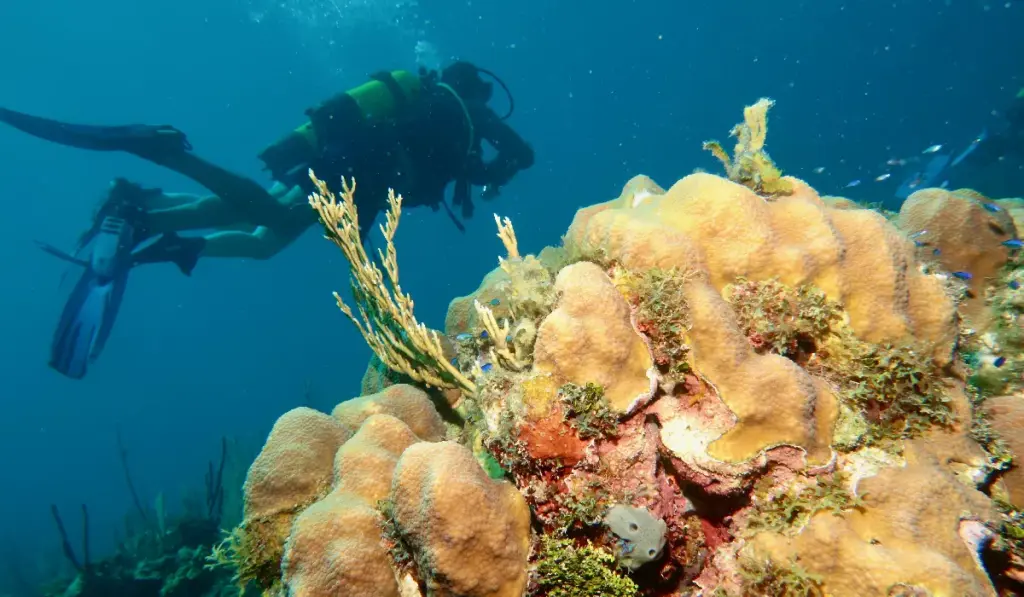
Avoiding unnecessary contact with the reef
The better your buoyancy, the less work your body has to do.
4. Improve Your Trim and Body Position
Your position in the water matters.
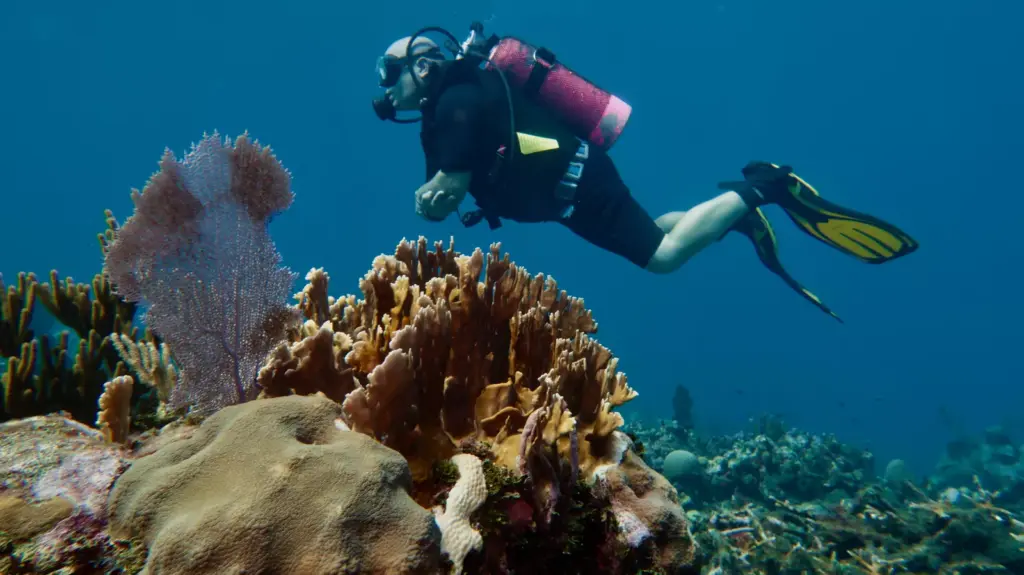
A streamlined diver creates less drag and usually needs less effort to move forward.
Try to maintain a comfortable horizontal position rather than swimming with your legs constantly pointing downward.
Good trim can help you:
Reduce drag
Swim more efficiently
Improve buoyancy control
Protect the reef by maintaining appropriate distance
Reduce unnecessary effort
And there’s an important environmental benefit too:
Good trim and buoyancy make it easier to observe marine life without touching the reef.
5. Minimize Unnecessary Movement
New divers sometimes use their arms and legs more than necessary.
Underwater, efficiency matters more than speed.
Try:
Controlled fin movements
Using your legs rather than your arms for propulsion
Keeping your hands relaxed
Avoiding unnecessary movements
Using appropriate finning techniques for the conditions
Every movement requires energy.
And more energy usually means more breathing.
Move less, move better.
 6. Don’t Swim Faster Than You Need To
Fast swimming may feel natural when you’re on the surface, but underwater it can quickly increase your workload.
Swimming too fast can:
• Increase your heart rate
• Increase your breathing rate
• Create more drag
• Increase your gas consumption
• Make buoyancy control more difficult
Instead, slow down.
Look around.
Enjoy the reef.
Let the underwater environment come to you.
Scuba diving isn’t a race.
7. Use the Right Amount of Weight
Being correctly weighted is another important part of efficient diving.
Too much weight can make you unnecessarily negative, requiring additional BCD inflation and potentially affecting your trim and buoyancy control.
It can also make you work harder to maintain your position in the water.
Your correct weighting depends on several factors, including:
• Your exposure protection
• Equipment configuration
• Cylinder type
• Salinity
• Your own buoyancy characteristics
Your instructor or dive professional can help you determine appropriate weighting for your equipment and diving conditions.
The goal isn’t to carry as little weight as possible. The goal is to use the appropriate amount for safe, controlled diving.
8. Monitor Your Gas and Plan Your Dive
Improving air consumption doesn’t mean ignoring your pressure gauge because you want to stay underwater longer.
Quite the opposite.
Good gas management is an essential part of safe diving.
Remember to:
Check your pressure regularly
Follow your dive plan
Stay within your training and experience
Communicate with your buddy
Respect your planned limits
Begin your ascent with sufficient gas according to your plan
Your dive should always be planned around your available gas and the conditions — not around trying to stay underwater for as long as possible.
 Don’t Compare Your Air Consumption With Other Divers
One important thing to remember:
There is no single “good” air consumption number that applies to every diver.
Two divers can use different amounts of gas on the same dive and both be perfectly normal.
Gas consumption is affected by factors such as:
• Depth
• Water temperature
• Current
• Waves
• Equipment
• Cylinder size
• Experience
• Physical effort
• Stress
• Breathing patterns
• Buoyancy and trim
Instead of asking:
“Why am I using more air than that diver?”
ask:
“Am I becoming more relaxed and efficient compared with my own previous dives?”
That’s a much better way to measure progress.
 Improve Your Diving With Buoyancy Training
If you want to improve your air consumption, don’t focus only on your breathing.
Improve the way you dive.
At Scuba Vida, you can develop your skills through additional training such as:
Advanced Diving Course
Continue developing your diving skills, confidence and underwater control while gaining experience in different diving situations.
Buoyancy / Hovering Specialty
Focus specifically on buoyancy control, hovering and becoming more comfortable and efficient underwater.
These skills can help you:
Improve buoyancy control
Improve trim
Reduce unnecessary effort
Protect the reef
Become a more relaxed diver
Use your gas more efficiently
 Take Your Diving to the Next Level
Better air consumption isn’t about trying to stay underwater forever.
It’s about becoming a better diver.
When you improve your breathing, buoyancy, trim and swimming technique, diving becomes easier and more enjoyable.
And when diving becomes easier, your gas consumption may improve naturally.
Want to improve your diving and become more efficient underwater?
Join Scuba Vida for an Advanced Diving Course or Buoyancy / Hovering Specialty in Varadero.
Tell us your experience level and travel dates, and we’ll help you choose the right training or diving experience for your trip to Cuba. 
 Related Articles
• Beginner’s Guide to Scuba Diving in Varadero: Everything You Need to Know
• What to Expect From Your First Dive in Cuba
• Is Diving in Cuba Safe?
• What You Learn Before Your First Scuba Dive
Ready to improve your diving?
Tell us your experience level and travel dates, and we’ll recommend the best dives or training for you in Varadero.