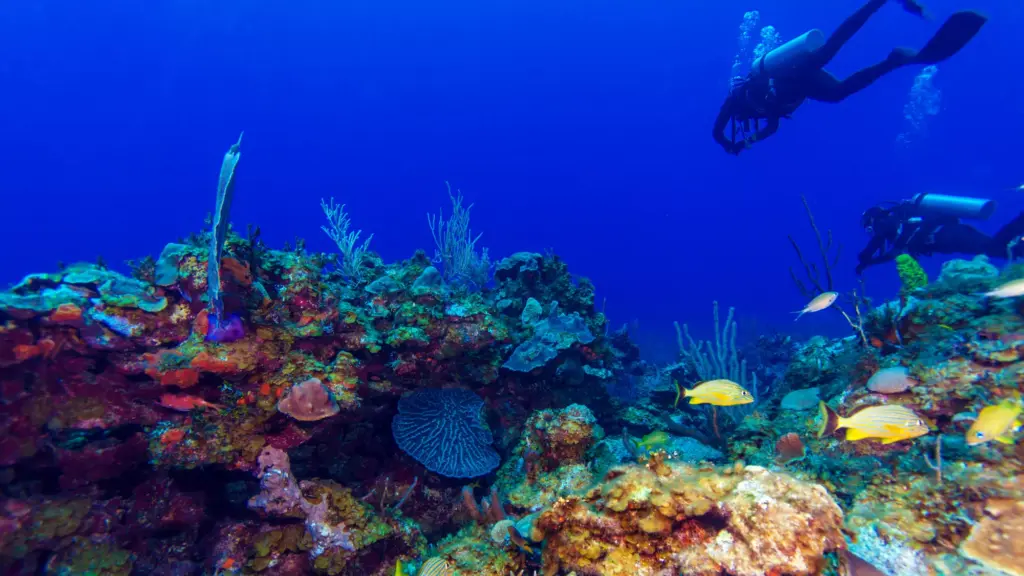
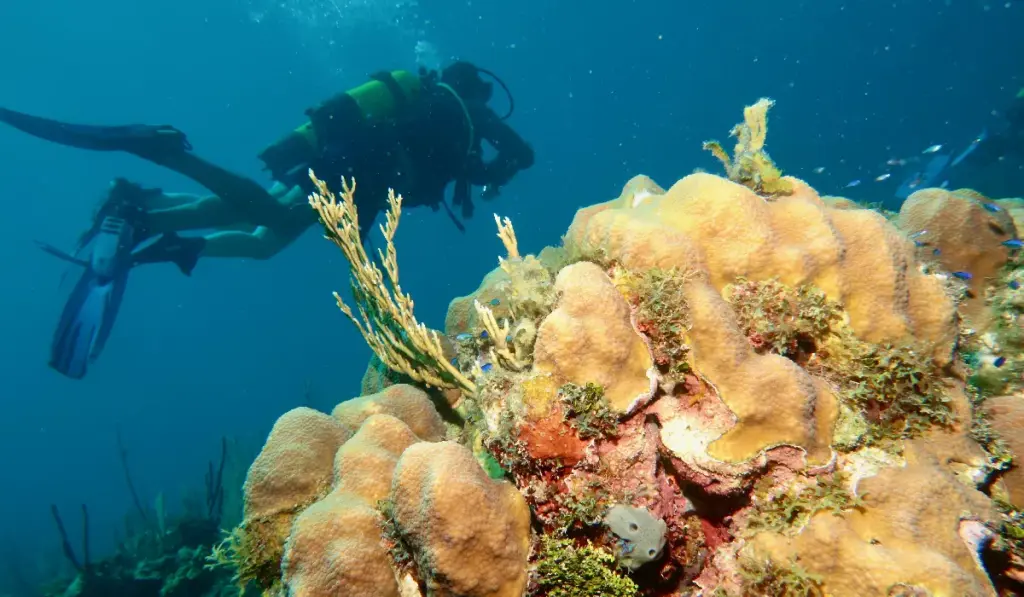
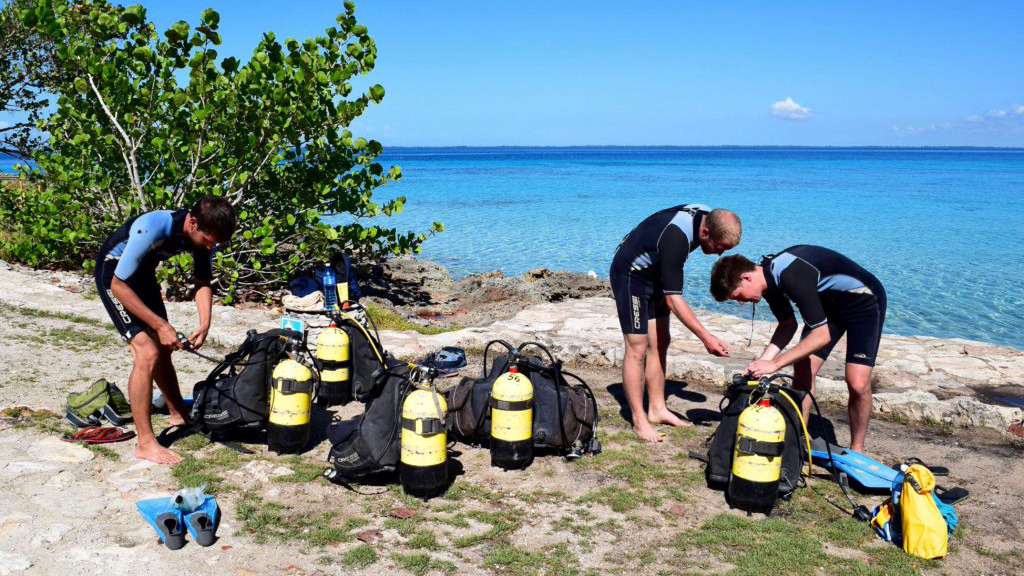
Scuba diving is usually associated with adventure, coral reefs and exploring the underwater world.
But there’s another side to diving that you notice once you’re underwater:
Your body moves differently.
Buoyancy supports you in the water. Finning provides gentle physical activity. Your breathing becomes an important part of your diving technique, and maintaining your position underwater requires coordination and body awareness.
So, is scuba diving good for your body?
It can be a rewarding form of physical activity, but it isn’t a replacement for regular exercise or medical treatment.
Diving has unique physiological demands, and whether it is appropriate for you depends on your health, fitness, experience and the type of diving you’re doing.
At a Glance
Aspect What scuba diving involves
Movement Finning and controlled body movements
Buoyancy Water supports much of your body weight
Breathing Continuous breathing through a regulator
Muscles Legs, core and postural muscles are involved
Coordination Buoyancy, trim and movement require body awareness
Exercise level Varies with conditions, equipment and effort
Medical considerations Important because diving involves pressure and immersion
1. Buoyancy Makes Movement Low Impact
One of the most noticeable physical differences between diving and many land-based activities is buoyancy.
In the water, your body is supported by the surrounding water rather than resting entirely on your feet or joints.
This can make underwater movement feel smooth and low impact.
But there’s an important distinction:
Low impact doesn’t mean physically effortless.
You’re still swimming, carrying equipment and dealing with the underwater environment.
Currents, waves, cold water, depth and equipment can all increase the physical demands of a dive.
2. Finning Uses Your Muscles
Every time you kick your fins, you’re using your lower-body muscles.
Depending on your technique and the conditions, diving can involve:
• Legs
• Glutes
• Core muscles
• Back and postural muscles
• Shoulders and arms for equipment handling and positioning
A relaxed dive may involve relatively gentle movement, while swimming against current or carrying equipment on the surface can require considerably more effort.
This is why it is more accurate to describe scuba as physical activity with variable intensity, rather than claiming that every dive provides a specific workout.
3. Your Core Helps Keep You Balanced
Good diving isn’t simply about kicking your fins.
You also need to maintain your position in the water.
Your body position—often called trim—affects how efficiently you move.
A balanced diver can remain relatively horizontal and make small adjustments instead of constantly fighting their position.
This requires coordination between:
• Buoyancy
• Breathing
• Body position
• Fin movement
• Equipment configuration
As your skills improve, these adjustments can become almost automatic.
4. Breathing Becomes Part of the Experience
Scuba diving gives you a very different relationship with breathing.
You breathe through a regulator while underwater, and your breathing pattern becomes something you’re much more aware of.
You need to:
• Breathe continuously
• Avoid holding your breath
• Breathe calmly and normally
• Monitor your air supply
• Understand how breathing affects buoyancy
Your lungs also influence buoyancy because changes in lung volume slightly change your overall volume in the water.
That means breathing, buoyancy and body position are closely connected.
However, it would be misleading to say that scuba automatically improves lung function or oxygen efficiency.
Breathing compressed gas underwater is physiologically different from breathing air at the surface, and breathing becomes more demanding as depth increases because gas density increases. DAN discusses these physiological effects in its diving-medicine resources.
5. Diving Develops Body Awareness
One of the less obvious benefits of scuba is how aware you become of your body.
Underwater, small changes matter.
You notice:
• Your body position
• Your breathing
• Your buoyancy
• Your fin movement
• Your depth
• Your orientation
• Your proximity to the reef
This creates a strong connection between movement and the surrounding environment.
Good divers learn to make small, controlled adjustments rather than large movements.
That awareness can make diving feel almost effortless once the basic skills become familiar.
6. Neutral Buoyancy Changes How You Move
On land, movement is mostly two-dimensional.
Underwater, you can move through three dimensions.
You can:
• Hover
• Ascend
• Descend
• Turn
• Roll
• Move horizontally
• Stop in mid-water
This is one reason scuba can feel so different from ordinary exercise.
You’re not simply moving from one point on the ground to another.
You’re moving through the water column.
If you’ve read our article [Why Scuba Diving Feels Like Anti-Gravity], you’ll recognize this as one of the most enjoyable parts of diving.
7. Does Diving Improve Circulation?
This is one claim I’d be careful with.
Immersion in water and hydrostatic pressure do affect the cardiovascular system, but that doesn’t mean scuba should be advertised as a treatment for poor circulation or swelling.
Being immersed in water changes how blood is distributed around the body, and diving also introduces pressure and breathing changes.
These physiological effects are one reason fitness to dive matters.
So rather than saying:
“Scuba diving improves circulation and reduces swelling.”
A more accurate conclusion is:
Water immersion produces measurable physiological effects on the cardiovascular system, but these should not be interpreted as a medical treatment or guaranteed health benefit.
If you have cardiovascular, respiratory or other medical concerns, discuss your fitness to dive with an appropriately qualified healthcare professional familiar with diving medicine.
8. Is Scuba Diving Good Exercise?
It can be a form of exercise, but the amount varies enormously.
A relaxed dive in calm water is very different from:
• Swimming against current
• Shore diving through surf
• Carrying equipment over a beach
• Diving in cold water
• Performing a long surface swim
• Managing difficult conditions
Your breathing rate and physical effort can increase considerably when you are working harder underwater.
For that reason, don’t choose scuba as a substitute for a structured fitness program.
Instead, think of it as an activity that combines movement, coordination, equipment management and exploration.
9. What About Joint Stress?
Buoyancy can make underwater movement feel much easier on the joints than many weight-bearing activities.
You’re not repeatedly landing on a hard surface or carrying your entire body weight through every step.
However, diving isn’t completely free of physical loading.
You may still need to:
• Carry your equipment
• Walk to the entry point
• Climb boat ladders
• Handle tanks
• Swim on the surface
• Manage current or waves
If you have joint problems or another physical limitation, tell your dive professional beforehand so the experience can be adapted where appropriate.
10. Diving Can Improve Your Confidence in the Water
The physical benefits aren’t the only thing that matters.
Learning to control your body underwater can also build confidence.
At first, you may think about every movement:
“Am I floating?”
“Am I breathing correctly?”
“Where are my fins?”
With practice, these things become more natural.
You begin to trust your equipment and your skills.
That can make the underwater experience much more relaxed.
11. Is Scuba Diving Suitable for Everyone?
No.
This is an important point to include in any article about the health effects of diving.
Scuba diving places unique demands on the body because of:
• Pressure changes
• Breathing compressed gas
• Immersion
• Physical exertion
• Temperature
• Equipment
• The underwater environment
Some medical conditions can affect a person’s fitness to dive.
If you have a medical condition, take certain medications, have recently had surgery or are unsure whether diving is appropriate for you, get medical advice before diving.
Don’t assume that because scuba feels gentle underwater, it is automatically suitable for everyone.
12. What About Beginners?
You don’t need to be an elite athlete to start scuba diving.
For an introductory experience, the physical demands can often be kept appropriate to the participant and conditions.
Your instructor can help you learn:
• How to breathe underwater
• How to use the equipment
• How to control your buoyancy
• How to move efficiently
• How to communicate underwater
• How to respond to basic situations
The goal isn’t to turn your first dive into a workout.
It’s to learn comfortably and safely while discovering what being underwater feels like.
13. Why Buoyancy Is So Important
If there is one physical skill that connects many of these benefits, it is buoyancy control.
Good buoyancy can help you:
• Move efficiently
• Reduce unnecessary finning
• Maintain your depth
• Improve your trim
• Avoid contact with coral
• Conserve breathing gas
• Feel more comfortable underwater
It also makes diving more enjoyable.
Instead of constantly correcting your position, you can spend more time looking around and appreciating the environment.
14. Scuba Diving and Relaxation
Many divers describe diving as relaxing.
That doesn’t mean diving is automatically relaxing for everyone.
Beginners may initially feel:
• Excited
• Nervous
• Overwhelmed
• Focused on their equipment
• Concentrated on breathing and equalization
As those skills become familiar, the experience can become much calmer.
The combination of controlled movement, buoyancy and focusing on the underwater environment is one reason many people find diving personally rewarding.
But again, relaxation is an individual experience, not a medical benefit that every diver should expect.
So, Is Scuba Diving Good for Your Body?
Scuba diving can be a rewarding form of physical activity.
It combines buoyancy-supported movement, finning, coordination, body awareness and controlled breathing.
It can feel gentle because the water supports your body, but it can also become physically demanding depending on the conditions and the type of diving.
The most important thing is not to think of scuba as a medical treatment or a replacement for exercise.
Think of it as something different:
A physical activity where your body learns to move through a three-dimensional environment while you explore the underwater world.
And for many divers, that’s the real benefit.
Start Your Diving Journey in Varadero
If you’re curious about how scuba feels but have never tried it, Varadero offers accessible opportunities for beginners.
Sites such as Playa Coral have shallow reef areas that can be used for introductory experiences when conditions are appropriate.
A professional instructor can help you learn the basics gradually—from equipment and breathing to buoyancy and underwater movement.
You don’t need to know everything before your first dive.
You just need to start with an experience appropriate for your ability and health.
Want to Experience It Yourself?
Curious about what scuba diving feels like for your body?
Tell Scuba Vida your travel dates, group size and experience level.
We’ll help you choose an appropriate diving experience in Varadero and guide you through the process step by step.
Related Articles
• [Why Scuba Diving Feels Like Anti-Gravity]
• [What to Expect From Your First Dive in Cuba]
• [Beginner’s Guide to Scuba Diving in Varadero]
• [Is Diving in Cuba Safe? A Beginner’s Guide]
• [Do You Need Certification to Dive in Cuba?]
• [How to Assemble Scuba Gear: Step-by-Step Setup & Buddy Check]