One of the most surprising things about scuba diving isn’t always what you see underwater.
It’s how your body feels.
Once you are properly weighted and achieve neutral buoyancy, you can hover in the water column without standing, sitting or constantly supporting your body weight.
You kick gently.
You breathe normally.
You look around.
And suddenly, the sensation of being underwater feels completely different from being on land.
Some divers describe it as feeling almost weightless or like a kind of anti-gravity experience.
It’s not actually zero gravity and scuba diving isn’t a form of medical therapy—but the sensation of being suspended in water is one of the things that makes diving so enjoyable.
At a Glance
What creates the feeling? What happens underwater?
Buoyancy Your body can become suspended in the water column
Breathing Your breathing affects your buoyancy and position
Slow movement Efficient finning can reduce unnecessary effort
Trim A balanced horizontal position makes movement easier
Water support The surrounding water supports your body from all directions
Focus The underwater environment encourages deliberate, controlled movement
The Magic of Neutral Buoyancy
The biggest reason scuba diving can feel like anti-gravity is neutral buoyancy.
When you are neutrally buoyant, you neither continually sink nor float toward the surface.
Instead, you can maintain your position in the water with relatively little effort.
Note: the visualization above isn’t necessary for this article and should be omitted from the published post; neutral buoyancy is a physics concept rather than a Pythagorean-theorem concept.
Actually, for this article I recommend not using a learning widget—the diving explanation is much clearer with a simple visual/photo rather than a mathematical visualization.
Good buoyancy is an important diving skill. DAN notes that divers with proper buoyancy control can maintain their position with very little effort, while poor buoyancy can increase exertion and create additional diving problems.
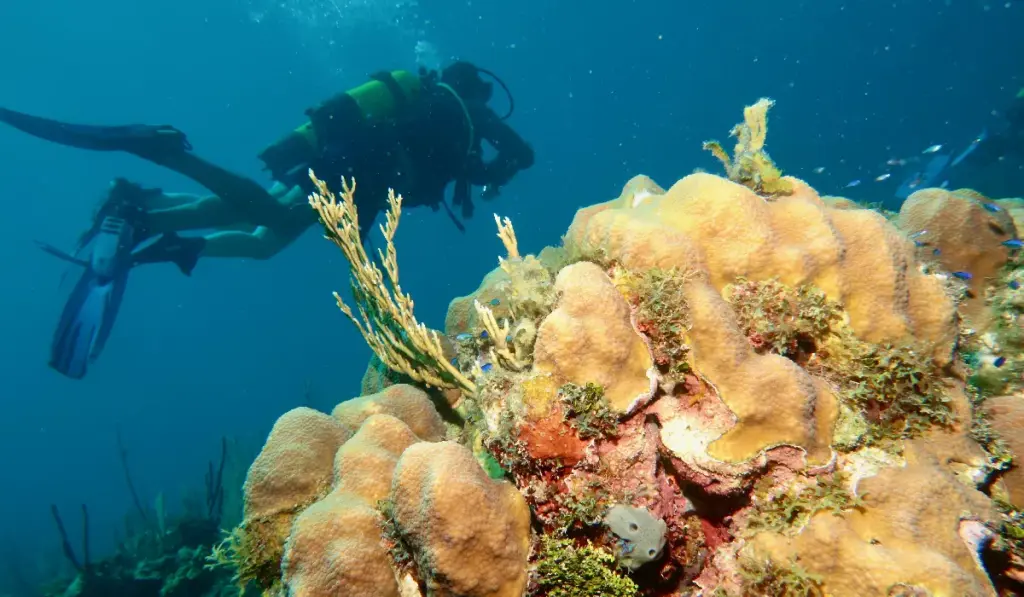
This is why experienced divers can sometimes appear to simply hover in one place.
You’re Not Fighting Gravity in the Same Way
On land, your body constantly interacts with gravity and the ground.
You stand.
You sit.
You walk.
You climb.
Underwater, buoyancy changes the experience.
Instead of supporting yourself against the ground, the water surrounds your body and provides an upward force.
With appropriate weighting and a properly adjusted BCD, you can find a point where the downward force of your weight and the upward force of buoyancy are balanced.
That is the sensation divers often describe as floating.
Your Breathing Becomes Part of Your Buoyancy
There’s another fascinating part of the experience:
Your lungs are part of your buoyancy system.
When you inhale, the air volume in your lungs increases slightly and you become more buoyant.
When you exhale, your lung volume decreases and you become slightly less buoyant.
PADI explains that divers can use controlled breathing as part of their buoyancy awareness.
This doesn’t mean you should deliberately manipulate your breathing to make yourself rise and fall dramatically.
Quite the opposite.
Scuba divers should breathe continuously and normally and never hold their breath.
As your buoyancy skills improve, you simply become more aware of how your breathing and position interact.
Why Experienced Divers Seem to Move So Slowly
Watch an experienced diver underwater and you may notice something interesting.
They often don’t appear to be working very hard.
There may be only a small movement of the fins.
The body remains relatively horizontal.
The diver makes tiny adjustments rather than large movements.
That’s not because diving requires no physical effort.
It’s because good technique makes movement more efficient.
PADI notes that neutral buoyancy and relaxed movement can reduce unnecessary exertion and help with gas consumption.
The goal isn’t to stop moving completely.
It’s to move only as much as necessary.
The Underwater Version of Slow Movement
On land, we are used to quick movements.
Underwater, many things happen more slowly.
You adjust your position.
You look at a fish.
You hover over a coral formation.
You change direction with a small fin movement.
You stop.
You observe.
This controlled pace can make diving feel very different from many land-based activities.
It’s one reason people who are constantly active on land sometimes find their first relaxed dive surprisingly calming.
Why the Water Feels So Supportive
There’s also something physically unusual about being surrounded by water.
Instead of standing on a floor or sitting in a chair, your body is supported by the surrounding water.
With neutral buoyancy, you aren’t simply floating at the surface.
You’re suspended within the water column.
That creates a very different physical sensation.
You can turn your body in three dimensions.
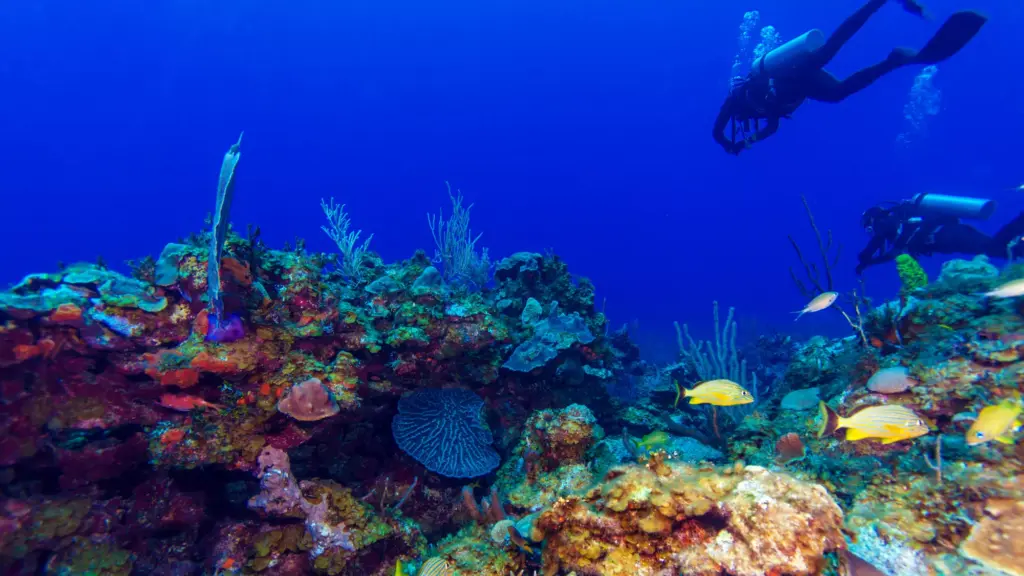
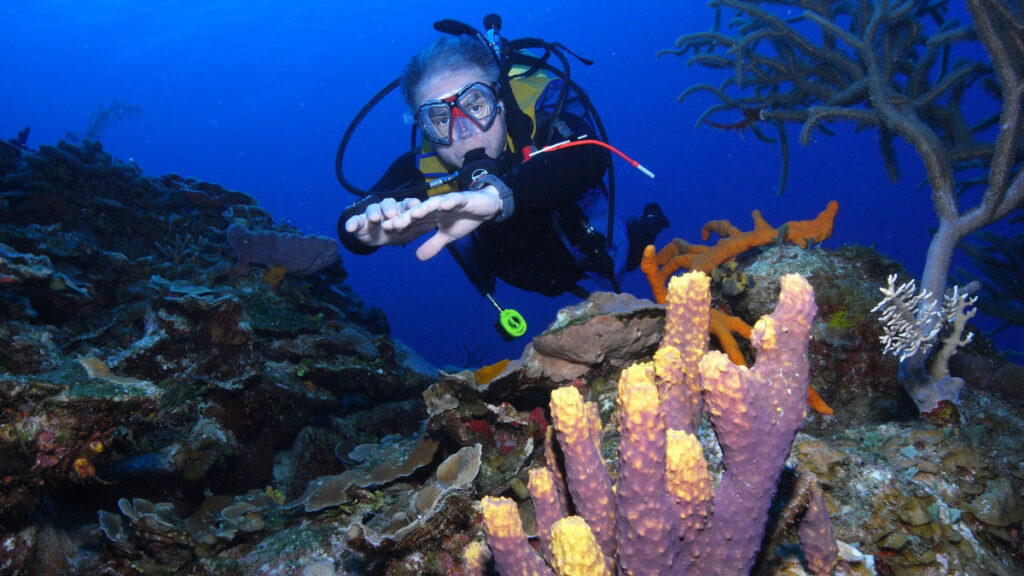
You can hover above the reef.
You can look up, down or sideways without needing to change your position on the ground.
For many divers, this is one of the most memorable parts of the experience.
Is Scuba Diving Actually Relaxing?
It can be.
Many divers describe a dive as peaceful because the activity requires attention to breathing, buoyancy, movement and surroundings.
DAN also notes that, for fit and well-trained divers, diving can be experienced as a relaxed and pleasant activity.
But it’s important not to confuse that personal experience with a medical claim.
Scuba diving isn’t therapy, and it isn’t appropriate for everyone.
Diving involves pressure changes, breathing compressed gas, immersion, physical exertion and environmental stressors.
The relaxing experience comes from a combination of skills, environment and personal experience—not from scuba diving being a medical treatment.
Why Beginners May Not Feel Weightless Immediately
If you’re new to scuba diving, don’t worry if your first dive doesn’t feel like floating meditation.
You may initially be thinking about:
• Where your hands should be
• How much air is in your BCD
• Your regulator
• Your mask
• Equalizing your ears
• Your depth
• Your position in the water
• Your instructor’s signals
That’s completely normal.
Neutral buoyancy is a skill that develops with practice.
As you become more comfortable with your equipment and breathing, you can spend less mental energy thinking about every movement.
Eventually, hovering can start to feel much more natural.
Buoyancy Is More Than Just Comfort
Good buoyancy isn’t only about creating that wonderful weightless sensation.
It is also an important diving skill.
Good buoyancy can help you:
• Maintain your planned depth
• Reduce unnecessary finning
• Conserve breathing gas
• Avoid accidental contact with coral
• Protect marine life
• Move more efficiently
• Make controlled ascents and descents
DAN describes buoyancy control as a key component of diving safety, while PADI also emphasizes its importance for efficient and environmentally responsible diving.
So when you see an experienced diver hovering effortlessly above a reef, you’re watching more than a cool trick.
You’re seeing good diving technique.
Scuba Diving Is Not Completely Effortless
It’s tempting to describe scuba as completely effortless once you’re neutrally buoyant.
That’s not quite accurate.
You’re still carrying equipment.
You’re still swimming.
You may encounter current, waves or changing conditions.
Cold water can also increase the physical demands of diving.
And breathing compressed gas underwater is physiologically different from breathing air at the surface.
The sensation is better described as:
supported, balanced and unusually free-moving.
That’s what makes the experience feel almost like anti-gravity.
A Three-Dimensional Way to Move
Perhaps the most unusual part is that scuba gives you access to movement in three dimensions.
On land, movement is mostly organized around a surface.
Underwater, you can:
• Rise
• Descend
• Hover
• Roll
• Turn
• Move horizontally
• Stop in mid-water
Once your buoyancy and trim are under control, this can feel remarkably natural.
You’re no longer simply walking through an environment.
You’re moving through it.
Why This Can Be So Appealing to Divers
This combination of buoyancy, slow movement and underwater breathing is one reason many divers become fascinated with scuba diving.
The experience isn’t just about seeing coral, fish, turtles or other marine life.
It’s about entering a completely different physical environment.
For a while, you aren’t standing on the bottom.
You aren’t walking.
You aren’t carrying your body through space in the usual way.
You’re hovering.
And that can be an extraordinary feeling.
How to Experience Better Buoyancy
If you’re a beginner and want to experience that weightless feeling, focus on the fundamentals:
1. Get your weighting right
Too much weight can make buoyancy harder to manage.
Too little can make it difficult to descend and maintain your planned position.
Your instructor can help you establish appropriate weighting for the equipment and conditions.
2. Learn to use your BCD gradually
Small adjustments are easier to control than large ones.
Give the BCD time to respond rather than repeatedly adding and dumping large amounts of air.
3. Breathe continuously
Never hold your breath while scuba diving.
Your normal breathing pattern naturally influences buoyancy, and maintaining continuous breathing is an essential diving safety practice.
4. Keep a relaxed body position
A balanced horizontal trim can make finning more efficient and reduce unnecessary movement.
5. Practice
Buoyancy is not something every diver masters on their first dive.
It improves with experience.
If you want to develop the skill further, buoyancy-focused training such as PADI’s Peak Performance Buoyancy course is specifically designed to improve weighting, trim and buoyancy control.
What Does Scuba Diving Feel Like for a First-Time Diver?
Your first dive may feel like a combination of excitement, concentration and curiosity.
You may initially notice the unusual feeling of breathing underwater.
Then you begin to relax.
You notice the water supporting you.
You start making smaller movements.
You look around.
And eventually, there can be a moment when you realize:
“I’m actually floating underwater.”
That’s often the moment when scuba starts to make sense.
Experience the Feeling in Varadero
Varadero is a great place to discover what that underwater sensation feels like because there are shallow reef environments suitable for introductory diving experiences.
At sites such as Playa Coral, beginners can experience the reef under professional supervision while gradually becoming comfortable with breathing, equipment and buoyancy.
The goal of a first dive shouldn’t be to immediately achieve perfect hovering.
It’s to become comfortable, learn the basics and enjoy the underwater environment at a pace appropriate for your experience.
Is Scuba Diving Good for Your Body?
You may also be wondering whether the physical sensation of diving means scuba is actually beneficial for your body.
That’s a separate question.
Scuba diving involves physical exertion and physiological changes from immersion and pressure, so it shouldn’t automatically be described as exercise therapy or a treatment.
If you have a medical condition, concerns about fitness to dive or questions about whether diving is appropriate for you, speak with an appropriately qualified medical professional familiar with diving medicine.
For a general introduction, see our related guide:
[Is Scuba Diving Good for Your Body?]
Start Your Diving Journey in Varadero
If you’re new to scuba diving, you don’t need to understand every part of diving physics before getting in the water.
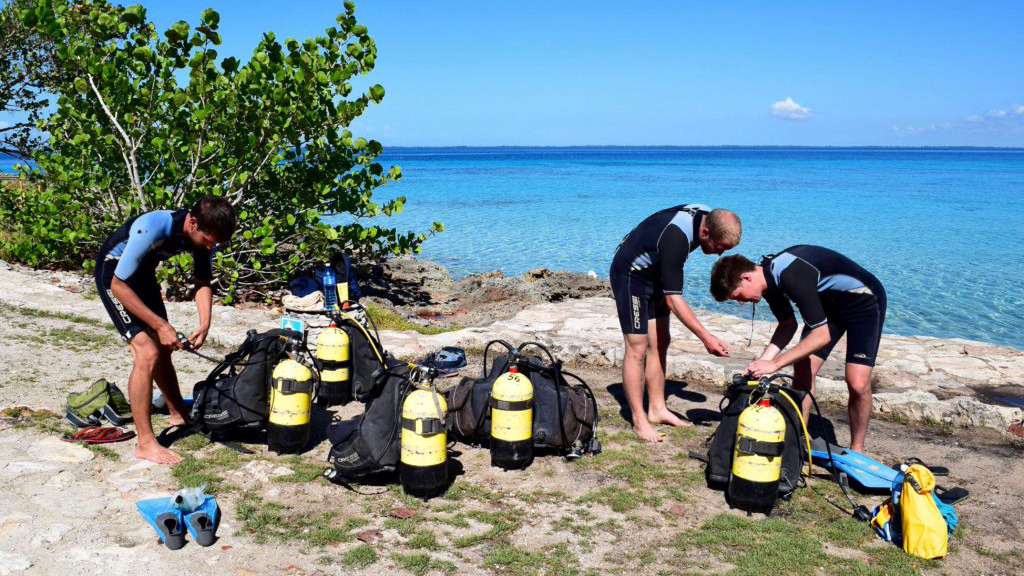
Your instructor will guide you through the equipment, breathing, basic skills and buoyancy step by step.
You can also learn more from our beginner guides:
• [Beginner’s Guide to Scuba Diving in Varadero]
• [What to Expect From Your First Dive in Cuba]
• [Do You Need Certification to Dive in Cuba?]
• [Is Diving in Cuba Safe? A Beginner’s Guide]
Experience the Feeling Yourself
The first time you hover above a coral reef, look down and realize that you’re suspended in the water rather than standing on anything, you understand why divers love this part of scuba diving.
It’s not literally anti-gravity.
It’s not medical therapy.
It’s something simpler:
For a little while, the water supports you in a way the land never can.
If you’re curious about experiencing that feeling in Varadero, tell Scuba Vida your travel dates, group size and diving experience.
We’ll help you choose an appropriate introduction to the underwater world and guide you through it step by step.
Recommended Reading
• [What to Expect From Your First Dive in Cuba]
• [Beginner’s Guide to Scuba Diving in Varadero]
• [Do You Need Certification to Dive in Cuba?]
• [Is Diving in Cuba Safe? A Beginner’s Guide]
• [How to Assemble Scuba Gear: Step-by-Step Setup & Buddy Check]