Your first scuba dive is exciting, but it is completely normal to feel a little nervous too.
For many people, the biggest questions are simple: What happens when I arrive? Will I be able to breathe underwater? What if I feel uncomfortable? How deep will I go?
The good news is that a first scuba experience is designed to introduce you to diving gradually. With a qualified instructor, you begin with basic equipment and safety information, practice in shallow water, and only continue when you feel comfortable.
At Scuba Vida in Varadero, we regularly introduce beginners to the underwater world at accessible sites such as Playa Coral and Bacunayagua.
Here is what you can expect from your first dive in Cuba, step by step.
At a Glance
What to Expect Typical Experience
Experience level No previous scuba certification required for Discover Scuba
Instructor Direct supervision by a qualified instructor
Total experience Around 2–3 hours, depending on the program
First practice Shallow water
Underwater experience Gradual introduction to breathing and basic skills
Typical beginner sites Playa Coral and Bacunayagua
Main skills Breathing, equalization, basic equipment use, hand signals and buoyancy
Diving depth Determined by the program, instructor, conditions and your comfort
Main goal Enjoy your first underwater experience safely and confidently
The exact program, depth and duration can vary depending on the dive center, conditions and individual participant.
1. Welcome and Getting Ready
When you arrive, your instructor will explain how the experience works and help you get prepared.
This usually includes:
• Introducing you to the instructor and dive team
• Explaining what will happen during the experience
• Fitting your scuba equipment
• Answering your questions
• Reviewing important safety information
• Making sure you understand what to do before entering the water
There is no need to arrive already knowing how scuba equipment works.
Your instructor will explain the equipment you will use and how it helps you breathe and move underwater.
If you want to understand the equipment beforehand, read our guide:
How to Assemble Scuba Gear: Step-by-Step Setup & Buddy Check
2. A Simple Safety Briefing
Before entering the water, you will learn the basic information you need for your first dive.
Your instructor will explain things such as:
How to breathe underwater
You breathe normally through the regulator. You do not hold your breath.
How to equalize your ears
As you descend, increasing water pressure affects the air spaces in your ears. Your instructor will show you how to equalize gradually.
If your ears do not equalize, do not force them. Tell your instructor and stop or ascend slightly until you can equalize comfortably. DAN recommends taking your time and avoiding forceful equalization.
Hand signals
Because talking normally is not possible underwater, divers use simple hand signals to communicate.
You will learn the most important ones before entering the water.
Basic safety procedures
Your instructor will explain how to enter the water, how to stay with the group, what to do if you need assistance and how to communicate discomfort.
The objective is not to overwhelm you with information.
It is to give you the essential skills and knowledge you need to enjoy your first experience.
3. Practice in Shallow Water
This is one of the most important parts of your first dive.
Before heading out to explore the reef, you will have an opportunity to get comfortable in shallow water.
You may practice:
• Breathing through the regulator
• Floating and moving with your equipment
• Equalizing your ears
• Basic buoyancy control
• Using underwater hand signals
• Getting comfortable with the mask and regulator
• Simple skills your instructor wants you to practice
Discover Scuba programs are designed to introduce people to diving progressively, with basic skills practiced in a pool or shallow-water environment before or during the open-water experience.
Take your time
You do not have to rush through this part.
If you need another minute to become comfortable with your breathing, tell your instructor.
For a first-time diver, becoming comfortable in the water is more important than trying to move quickly to the reef.
4. Your First Underwater Experience
Once you and your instructor are comfortable, you can begin exploring.
This is often the moment when the experience changes completely.
You are no longer thinking about the equipment.
You are simply looking around and realizing:
“I’m actually breathing underwater.”
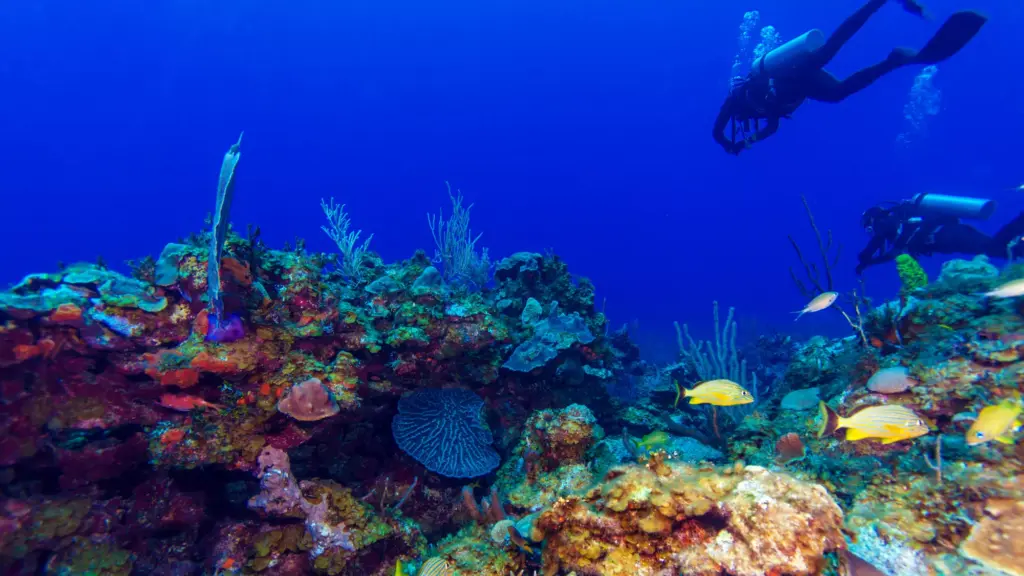
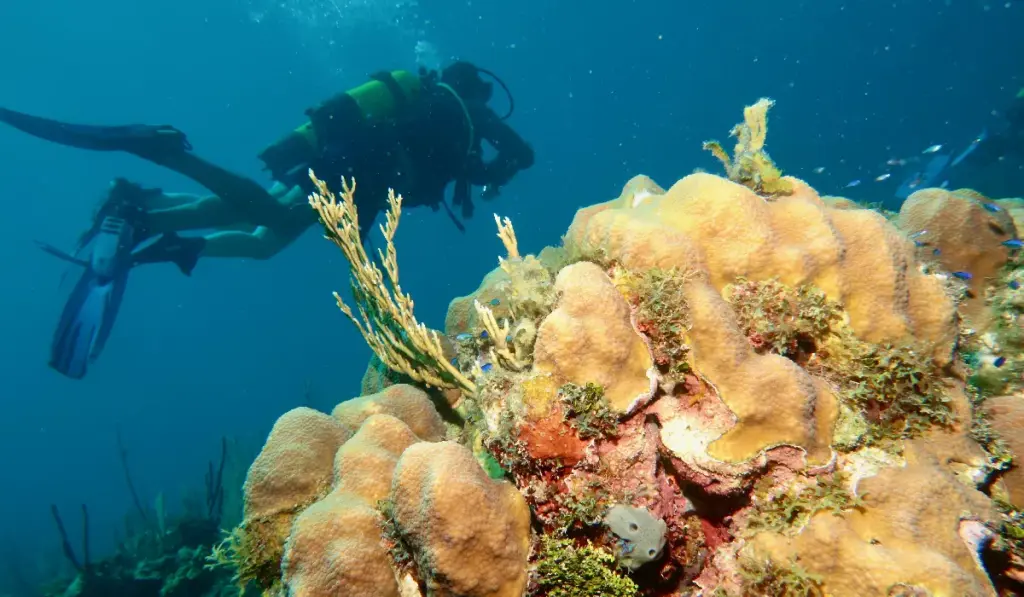
You may see:
• Colorful tropical fish
• Coral formations
• Sponges
• Sea fans
• Small reef animals
• Schools of fish moving across the reef
At first, you may move slowly and concentrate on your breathing.
That is completely normal.
With a little time, many beginners become more relaxed and start paying attention to the reef around them.
5. What Does Your First Dive Feel Like?
The first few minutes can feel unusual.
You are wearing equipment, breathing through a regulator and hearing your own breathing underwater.
You may also feel slightly different because scuba equipment changes how you move and float.
Instead of trying to swim quickly, your instructor will help you find a comfortable pace.
The best approach is simple:
Breathe normally. Look around. Listen to your instructor. Relax.
You do not need to be an expert swimmer to enjoy a supervised introductory scuba experience, but you should meet the program’s water-confidence and health requirements.
6. What If I Feel Nervous?
This is one of the most common questions we hear from first-time divers.
Feeling nervous before your first dive does not mean scuba diving is not for you.
The underwater environment is completely new, and your brain needs a little time to understand the experience.
If you feel nervous:
1. Tell your instructor.
2. Stop and breathe normally.
3. Take your time.
4. Stay in shallow water until you feel comfortable.
5. Do not feel pressured to continue if you are not ready.
Good instruction is not about pushing you through fear.
It is about helping you understand what is happening and giving you the time and support you need to become comfortable.
7. What If I Can’t Equalize My Ears?
This is another very common concern.
You may feel pressure in your ears during descent.
Your instructor will explain how to equalize before you go underwater.
If you cannot equalize comfortably, do not force it.
Let your instructor know.
You may need to stop descending or ascend slightly before trying again. DAN specifically advises divers to take their time and never force equalization.
If you cannot equalize, the dive may need to be shortened or stopped. That is much better than trying to push through pain.
8. Exploring the Reef
Once you are comfortable, the exciting part begins.
At beginner-friendly sites around Varadero, you can explore coral formations and tropical marine life while remaining under the supervision of your instructor.
Playa Coral
Playa Coral is particularly useful for introductory diving because the reef can be accessed from shore and offers relatively shallow routes suitable for beginners.
You can learn more in:
Playa Coral Cuba: Snorkeling & Shore Diving Near Varadero
Bacunayagua
Bacunayagua Reef is another option used for beginner experiences, with shallow water at the entry and reef routes that can accommodate different experience levels.
Read more:
Bacunayagua Diving Cuba: Coral Reefs, Marine Life & Cuba’s Highest Bridge
The exact site chosen for your dive should depend on your experience, comfort, weather, sea conditions and the instructor’s assessment on the day.
9. How Deep Will Your First Dive Be?
You do not need to go deep to have a great first dive.
For an introductory experience, the objective is to become comfortable with breathing, basic skills and the underwater environment.
The maximum depth depends on:
• The training or introductory program
• Your instructor
• Your comfort level
• The dive site
• Water conditions
• Your ability to equalize
• Applicable training standards
For example, PADI’s Discover Scuba Diving standards allow a supervised open-water experience to a maximum depth of 12 metres / 40 feet, while specific program arrangements can vary.
Your first dive is not a test of how deep you can go.
A shallow, relaxed dive where you feel comfortable can be much more valuable than going deeper than necessary.
10. How Long Does a First Dive Take?
Allow approximately 2–3 hours for the overall experience, depending on the program and dive center.
This can include:
• Arrival and preparation
• Equipment fitting
• Briefing
• Shallow-water practice
• Entry and exit
• The supervised dive
• Equipment removal and debrief
The actual underwater portion is often shorter than the total experience.
A typical introductory dive may involve around 30–45 minutes underwater, but this is not a guaranteed duration.
Your actual bottom time depends on factors such as:
• Air consumption
• Depth
• Water conditions
• Your comfort
• The dive plan
• Instructor guidance
The goal is not to stay underwater for a specific number of minutes.
The goal is to have a comfortable and enjoyable first experience.
11. Your Instructor Is There to Help
During an introductory dive, you are under the direct supervision of a qualified diving professional.
Your instructor will:
• Monitor your comfort
• Help you with your equipment
• Guide you through the skills
• Communicate with you underwater
• Control the pace of the experience
• Help you respond to problems
• Decide whether conditions are appropriate for continuing
Discover Scuba programs are specifically structured around direct professional supervision rather than independent diving.
This is one of the most important differences between an introductory experience and diving independently as a certified diver.
12. Protecting Cuba’s Coral Reefs
Your first dive is also your first opportunity to learn how to interact responsibly with the underwater environment.
You will learn why it is important to:
• Avoid touching coral
• Maintain good buoyancy
• Keep your fins away from the reef
• Avoid grabbing rocks or marine animals
• Never collect coral, shells or marine life
• Maintain a respectful distance from animals
Good buoyancy is especially important.
The less contact you make with the reef, the less chance you have of accidentally damaging coral or other fragile organisms.
You can learn more about responsible diving in:
Marine Life & Conservation in Cuba: A Diver’s Guide to Protecting Our Oceans
You may also enjoy:
Coral Bleaching in Cuba: What Divers Need to Know
13. What Marine Life Might You See?
Every dive is different.
You might see:
• Parrotfish
• Surgeonfish
• Angelfish
• Butterflyfish
• Grunts and snappers
• Sergeant majors
• Pufferfish
• Rays
• Lobsters
• Sea fans
• Sponges
• Other small reef animals
At Playa Coral and Bacunayagua, beginners can experience colorful reef environments without needing to be advanced divers.
You can read more about local marine life in:
Top Marine Animals You’ll See in Varadero, Cuba
and
Fish You’ll See When Diving in Varadero, Cuba
14. What Should You Bring?
Your dive center will explain what equipment is included, but it is useful to arrive prepared.
Depending on the activity, you may want:
• Swimsuit
• Towel
• Water
• Reef-friendly sun protection practices
• Comfortable clothes for before and after the dive
• Any required personal medication
• A positive attitude and a little patience
Most importantly, don’t arrive feeling that you need to know everything already.
That is what the briefing and instructor are there for.
15. What Happens After the Dive?
Once you are back on shore, you will remove your equipment and have an opportunity to talk about the experience.
This is often when first-time divers start asking questions such as:
“Can I do this again tomorrow?”
If you enjoy your first experience, you can discuss your next step with your instructor.
That could mean another supervised experience or starting a full scuba certification course, depending on your goals.
A Discover Scuba experience is designed partly to let you experience scuba diving before deciding whether you want to continue toward certification.
Why Varadero Is a Great Starting Point
Varadero gives beginners access to a variety of underwater environments without requiring every first dive to be a deep or technically demanding experience.
Sites such as Playa Coral and Bacunayagua offer opportunities to experience:
• Shallow reef environments
• Tropical marine life
• Shore-based diving
• Gradual underwater exploration
• Different routes for different experience levels
The right site is not necessarily the most famous one.
It is the site that matches your experience, comfort and the conditions on the day.
A Few Tips for Your First Dive
Don’t hold your breath
Breathe normally and continuously through your regulator.
Equalize early and often
Don’t wait until your ears hurt. Equalize gradually during descent and tell your instructor if you have difficulty.
Move slowly
You do not need to swim quickly.
Slow movements make it easier to stay relaxed and conserve air.
Look around
Your first instinct may be to concentrate entirely on yourself and your equipment.
Once you become comfortable, look around. That’s when you start noticing the fish and reef life.
Communicate
If something feels uncomfortable, tell your instructor.
There is no prize for pretending everything is fine.
Your First Dive Doesn’t Have to Be Perfect
You may not have perfect buoyancy.
You may take a little time to equalize.
You may feel nervous at first.
You may spend the first few minutes thinking more about your breathing than the reef.
That’s okay.
Your first dive is about learning what scuba feels like, becoming comfortable underwater and discovering whether you enjoy this completely different environment.
You don’t need to be an experienced diver before you take your first breath underwater.
You just need the right instruction, the right conditions and enough time to become comfortable.
Ready to Take Your First Breath Underwater?
If you’ve always wanted to try scuba diving, your first dive can be the beginning of something much bigger.
At Scuba Vida in Varadero, our instructors help beginners take their first steps underwater with patient instruction, appropriate equipment and a focus on safety and comfort.
From your first equipment fitting to your first look at a Caribbean reef, we’ll guide you through the experience step by step.
Ready to discover scuba diving in Cuba? Contact Scuba Vida and start planning your first underwater adventure in Varadero.
Related Articles
• Beginner’s Guide to Scuba Diving in Varadero: Everything You Need to Know
• Playa Coral Cuba: Snorkeling & Shore Diving Near Varadero
• Bacunayagua Diving Cuba: Coral Reefs, Marine Life & Cuba’s Highest Bridge
• How to Assemble Scuba Gear: Step-by-Step Setup & Buddy Check
• Understanding Coral Reefs: A Simple Guide for New Divers
• Top Marine Animals You’ll See in Varadero, Cuba
About Scuba Vida
Scuba Vida is a local dive center in Varadero, Cuba, offering scuba experiences, courses and guided dives for beginners and certified divers.
Our goal is simple: help you discover Cuba’s underwater world safely, comfortably and responsibly.