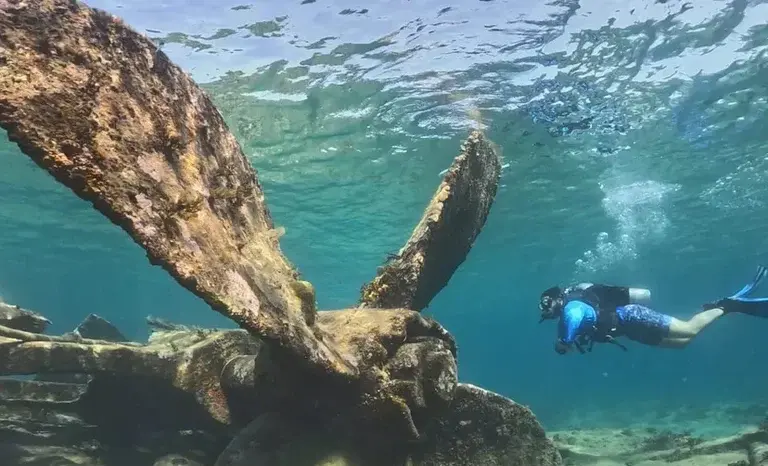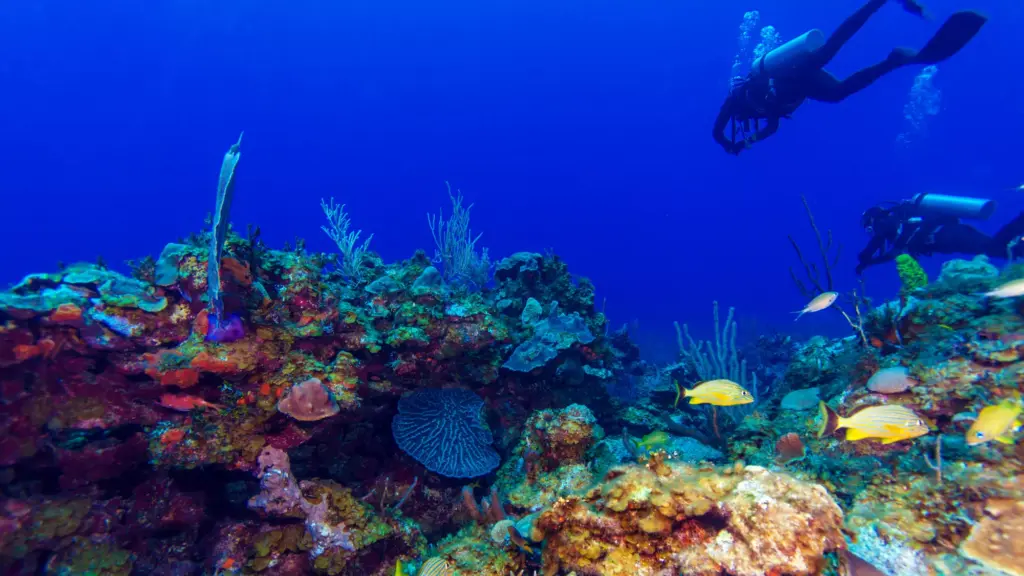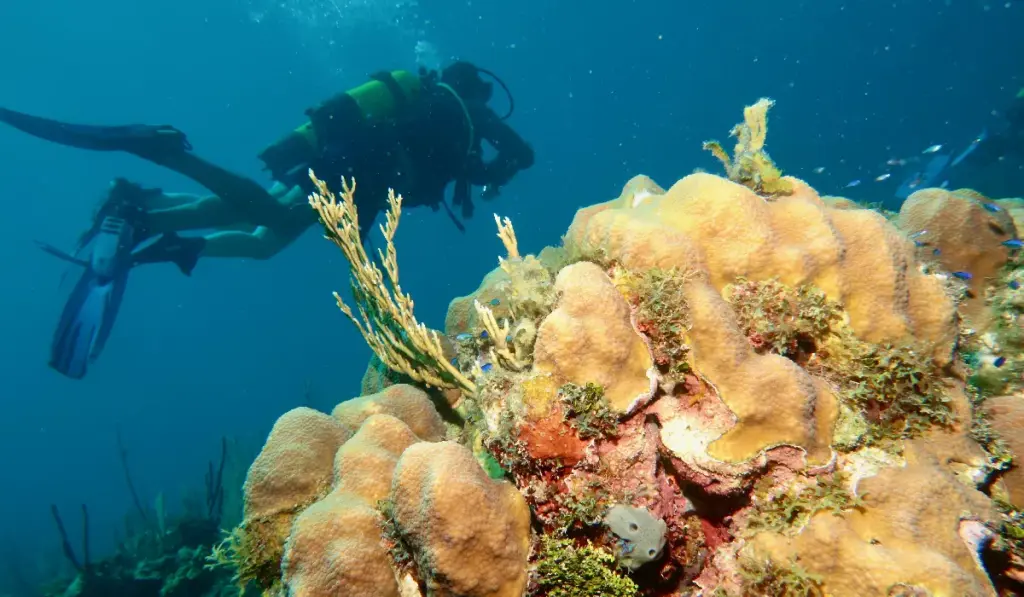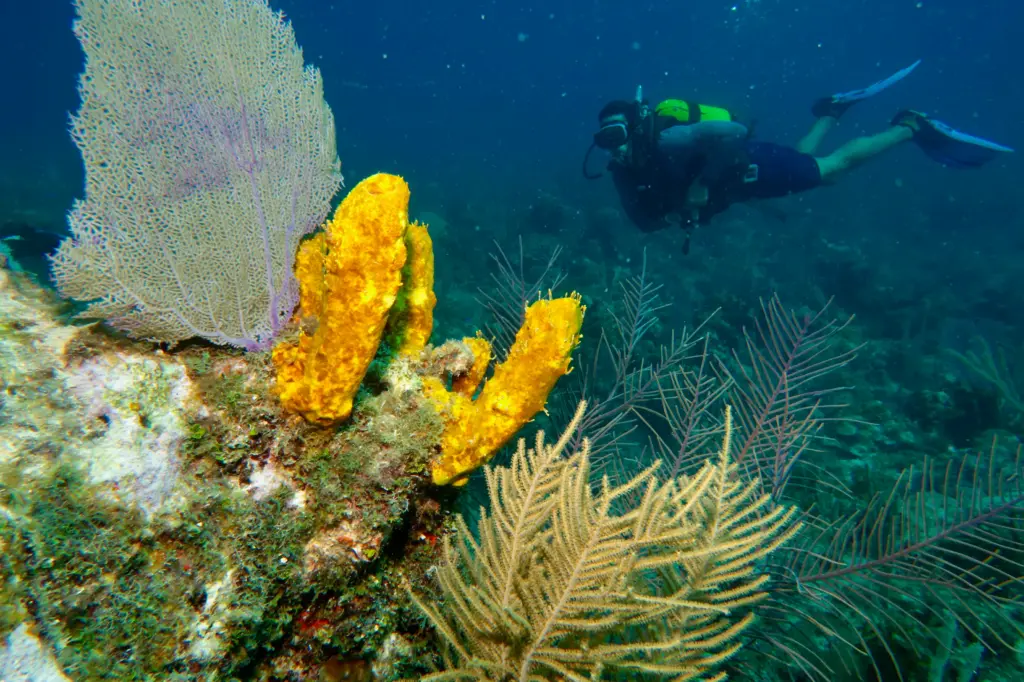
One of the most exciting parts of diving or snorkeling in Varadero is discovering the marine life living beneath the surface.
The reefs around Varadero are home to colorful tropical fish, crustaceans, rays and many smaller animals that can be easy to miss if you move too quickly.
Some encounters are almost expected on a reef dive. Others depend on the site, conditions, depth and a little bit of luck.
You might spend one dive watching a school of fish move across the reef, then discover a lobster hiding under a ledge or notice a perfectly camouflaged animal that you almost swam past.
Here are some of the marine animals you may encounter while diving and snorkeling around Varadero.
At a Glance
Marine Animal What to Look For Possible Varadero Encounter
Parrotfish Bright colors and beak-like mouth Common reef sighting
Blue tangs & surgeonfish Blue or patterned bodies, algae feeding Reef areas
Sergeant majors Small striped schooling fish Shallow reefs
Angelfish Bright colors and distinctive patterns Coral heads and reef structure
Pufferfish Rounded body and large eyes Reef and rocky areas
Lobsters Long antennae and spiny shell Reef crevices
Shrimp & crabs Small animals around holes and ledges Requires careful observation
Trumpetfish Long, narrow body Coral and sea fans
Rays Flat body and graceful movement Sandy areas and reef edges
Octopus Camouflage and unusual movement Occasional
Sea turtles Large, slow-moving reptiles Occasional
Reef sharks Larger predators Possible in suitable areas, not a routine sighting
Marine life sightings are never guaranteed and vary with dive site, conditions, season and natural animal behavior.
Tropical Reef Fish
Fish make up much of the activity you see on a typical Varadero reef.
Depending on the site, you may encounter:
• Blue tangs and other surgeonfish
• Parrotfish
• Sergeant majors
• Angelfish
• Butterflyfish
• Grunts
• Snappers
• Trumpetfish
• Pufferfish
Some stay close to coral formations while others move through sandy channels or open water.
And don’t assume the biggest fish are always the most interesting.
Once you slow down and start looking carefully, you’ll notice small interactions happening everywhere.
Parrotfish: Important Reef Grazers
Parrotfish are among the easiest reef fish to recognize.
Their strong, beak-like mouths allow them to scrape algae and other material from hard surfaces as they feed.
Their grazing helps regulate algae on the reef, while the material they process contributes to the production of carbonate sediments.
Look for:
• Bright colors
• A beak-like mouth
• Rounded bodies
• Fish actively feeding across the reef
They are often seen moving steadily across coral formations rather than staying in one place.
If you hear a scraping or crunching sound underwater, you may be close to a feeding parrotfish.
[Internal link: Fish You’ll See When Diving in Varadero, Cuba]
Blue Tangs and Surgeonfish
Blue tangs and other surgeonfish are another familiar sight on tropical reefs.
They feed heavily on algae and can often be seen moving across coral formations or along reef edges.
Their distinctive colors make them easy to spot, but try watching their behavior rather than simply taking a photograph and swimming on.
You may see them individually or in small groups, depending on the species and location.
Sergeant Majors: Small Fish With Big Personalities
Sergeant majors are small, striped reef fish that are particularly easy to notice around shallow coral areas.
Their yellow-and-black pattern makes them stand out against the reef.
They often move around coral structures in groups and can be especially noticeable to beginners because they are active in shallow water.
If you’re snorkeling or making your first scuba dive, these are often among the fish you learn to recognize first.
Angelfish and Butterflyfish
Angelfish and butterflyfish bring some of the brightest colors and patterns to the reef.
They often move around coral heads and reef structures while searching for food.
Some species are commonly seen in pairs or close to one another.
They can be excellent subjects for underwater photography, but don’t chase them for a photograph.
Instead, find a stable position, maintain good buoyancy and wait.
The fish will usually give you a better opportunity if you aren’t trying to follow it around the reef.
Pufferfish
Pufferfish are easy to recognize because of their rounded bodies, large eyes and unusual swimming style.
They may move slowly around reef structures, sandy areas and rocky sections.
If you encounter one, observe it without approaching too closely.
Pufferfish can inflate when stressed or threatened, but deliberately trying to make a pufferfish inflate is not responsible wildlife interaction.
The best encounter is one where the animal continues behaving normally.
Lobsters and Other Crustaceans
Not everything interesting on the reef is swimming in open water.
Look carefully into cracks, holes and spaces beneath coral formations and you may find:
• Caribbean spiny lobsters
• Small crabs
• Cleaner shrimp
• Other small crustaceans
Lobsters can be easier to identify because of their long antennae, but smaller crustaceans require more patience.
This is one reason slow diving is so rewarding.
The longer you spend looking carefully at the reef, the more you begin to notice.
Trumpetfish: The Masters of Disguise
Trumpetfish have an unusual, elongated body and narrow mouth.
They often stay close to coral, sea fans or other reef structures, where their shape and coloring can make them surprisingly difficult to spot.
Sometimes they remain almost motionless, using the reef as camouflage.
Once you learn what to look for, you’ll start noticing them more often.
Rays
Rays are among the most memorable animals you can encounter underwater.
Depending on the site and conditions, you may see a ray moving across a sandy area or gliding near the reef.
They can move surprisingly quickly when disturbed, so give them plenty of space.
Don’t swim directly above them or try to chase them for a photograph.
If you stay calm and maintain your distance, you may be rewarded with a beautiful encounter as the ray continues on its way.
Octopus: An Occasional but Unforgettable Encounter
Octopus are masters of camouflage.
They can change their color and skin appearance to help blend into their surroundings and can disappear surprisingly quickly into a small opening in the reef.
Finding one is often a matter of slowing down and looking closely.
Check:
• Small holes
• Rocks and reef ledges
• Coral structures
• Areas where the bottom changes from coral to sand
And if you’re lucky enough to find one, give it space.
An octopus hiding naturally is far more interesting than one that has been disturbed by divers trying to get a closer look.
Sea Turtles
Sea turtles are one of the marine animals many visitors hope to encounter in Cuba.
They are not guaranteed on a Varadero dive, but an unexpected turtle encounter can become one of the highlights of a trip.
You may see a turtle swimming over the reef or moving through open water before surfacing for air.
If you encounter one:
• Keep your distance.
• Don’t chase it.
• Don’t block its path to the surface.
• Don’t touch it.
• Allow it to continue its natural behavior.
The best turtle encounter is one where the animal barely notices you’re there.
Sharks: Possible, But Not a Typical Varadero Sight
Sharks deserve a little context.
Varadero diving is primarily known for its coral reefs, reef fish, shore dives, caves and wrecks rather than being a dedicated shark-diving destination.
If seeing bull sharks is one of your main reasons for visiting Cuba, Santa Lucía is a different destination worth considering.
Santa Lucía is known for guided bull shark encounters as well as reefs and historic wrecks.
[Internal link: Shark Diving in Santa Lucía Cuba: Bull Sharks, Reefs & Wrecks]
These encounters are professionally guided and specifically organized around shark diving. They should not be confused with the routine marine-life encounters you might have during a reef dive in Varadero.
Where Can You See Marine Life Around Varadero?
You can encounter marine life at many of the reef sites around Varadero.
Two particularly accessible options are Playa Coral and Bacunayagua.
Playa Coral
[Internal link: Playa Coral Cuba: Snorkeling & Shore Diving Near Varadero]
Playa Coral is a shallow reef environment accessible directly from shore.
It is suitable for snorkeling and beginner diving as well as certified divers exploring deeper sections according to experience and conditions.
The combination of coral formations, sandy areas and channels creates plenty of places for fish and smaller marine animals to live.
For photographers and beginners, the shallow environment can make it easier to spend time observing the reef without needing a deep dive.
Bacunayagua
[Internal link: Bacunayagua Diving Cuba: Coral Reefs, Marine Life & Cuba’s Highest Bridge]
Bacunayagua offers a different reef environment, with coral heads, channels and deeper routes for appropriately qualified divers.
The site is also interesting because of its spectacular landscape above the water, including the famous Bacunayagua Bridge and Yumurí Valley.
The Trick to Seeing More Marine Life
You don’t necessarily see more animals because you swim farther.
You often see more because you slow down.
Try this on your next dive:
Stop
Find a comfortable position and stop swimming for a moment.
Look
Instead of looking only ahead, examine the reef around you.
Listen
Some fish make surprisingly noticeable sounds while feeding.
Wait
Small animals may appear after you’ve been still for a few seconds.
Move Slowly
When you do move, use controlled fin movements and avoid kicking the reef.
This is especially useful for beginners.
The more comfortable you become underwater, the more attention you can give to the environment around you.
Responsible Wildlife Interaction
Marine life is not there for our entertainment.
We’re visitors in its environment.
A few simple habits can make your encounter better for both you and the animals:
• Keep a respectful distance.
• Never touch marine animals.
• Don’t chase wildlife.
• Don’t feed animals.
• Don’t deliberately frighten or provoke animals.
• Maintain good buoyancy.
• Keep your fins away from coral.
• Never collect shells, coral or other marine life.
• Follow local dive-site guidelines.
Good wildlife etiquette also makes photography better.
Animals that aren’t being chased are much more likely to continue their natural behavior.
[Internal link: Marine Life & Conservation in Cuba: A Diver’s Guide to Protecting Our Oceans]
[Internal link: Coral Bleaching in Cuba: What Divers Need to Know]
Every Dive Is Different
That’s one of the reasons we love diving around Varadero.
You may see a school of sergeant majors on one dive, a parrotfish feeding on the reef on another and then find a lobster hiding under a ledge.
Sometimes you’ll see something unexpected.
Sometimes you’ll spend an entire dive watching small reef fish and coral interactions that you would have missed if you were swimming quickly.
There is no guarantee of a particular animal.
That’s part of the adventure.
Explore Varadero’s Marine Life With Scuba Vida
Whether you’re snorkeling, trying scuba diving for the first time or exploring as a certified diver, our guides can help you get more from your time underwater.
We choose dive sites according to experience, interests and the conditions of the day, while encouraging divers to interact with marine life responsibly.
If you’d like to explore Varadero’s underwater world with Scuba Vida:
• Send us your travel dates.
• Tell us whether you’re a beginner or certified diver.
• Let us know what marine life interests you.
• We’ll help you choose an appropriate experience.
Come curious, slow down underwater and see what you can discover.
Related Articles
• [Fish You’ll See When Diving in Varadero, Cuba]
• [Understanding Coral Reefs: A Simple Guide for New Divers]
• [Playa Coral Cuba: Snorkeling & Shore Diving Near Varadero]
• [Bacunayagua Diving Cuba: Coral Reefs, Marine Life & Cuba’s Highest Bridge]
• [Marine Life & Conservation in Cuba]
• [Coral Bleaching in Cuba]
• [Shark Diving in Santa Lucía Cuba]
About Scuba Vida
Scuba Vida is a local dive center in Varadero, Cuba, offering guided scuba diving, Discover Scuba experiences and snorkeling around the reefs and dive sites of the region.
Our approach combines local knowledge, safety, small-group diving and responsible interaction with Cuba’s marine environment.