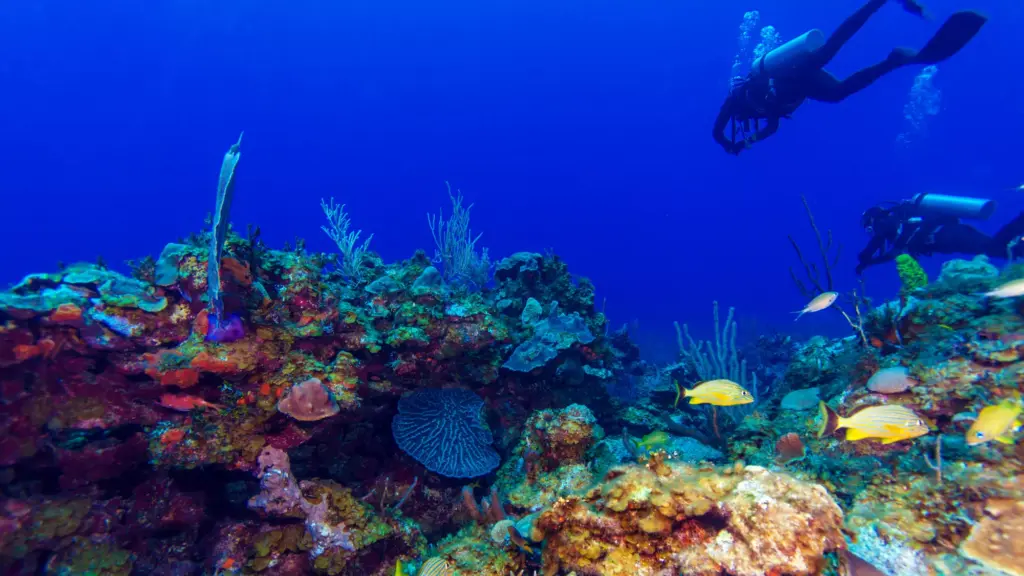
One of the most enjoyable parts of scuba diving in Varadero is discovering how much life is packed into Cuba’s coral reefs.
Even on shallow dives, you can encounter colorful parrotfish, blue tangs, surgeonfish, angelfish, butterflyfish, grunts and snappers moving through coral formations and sandy channels. Some dives may also bring surprises such as trumpetfish, pufferfish, lobsters, rays, turtles or even a small reef shark.
Every dive is different. The exact species you encounter depends on the dive site, depth, conditions and a little bit of luck.
Here are some of the reef fish and marine animals you may encounter when diving with Scuba Vida in Varadero.
At a Glance
What You May See Where to Look What Makes Them Special
Parrotfish Coral reef and rocky areas Bright colors and strong beak-like teeth
Blue tang & surgeonfish Coral gardens and reef edges Algae feeders with distinctive body shapes
Angelfish Around coral heads and reef structure Striking colors and patterns
Butterflyfish Coral heads and reef slopes Often seen moving around coral in pairs
Grunts & snappers Under ledges and around reef structure Often gather in groups
Trumpetfish Among coral and sea fans Excellent camouflage and unusual shape
Pufferfish Reef, rocks and sandy areas Distinctive shape and curious appearance
Rays Sandy areas and open water Graceful movement across the seafloor
Turtles Reef and open water Occasional, memorable encounters
Reef sharks Deeper reef areas and open water Possible special sighting
Marine life sightings are never guaranteed and vary with location, conditions, season and natural behavior.
Parrotfish: The Reef Gardeners
Parrotfish are among the most recognizable fish on Caribbean coral reefs.
Their beak-like mouths are adapted for scraping and biting algae from hard surfaces. Their bright colors can make them one of the first fish a diver notices, but they are also fascinating to watch because of the way they interact with the reef.
Depending on the species and life stage, their colors can range from greens and blues to pinks, yellows and other combinations.
Look for:
• A strong, beak-shaped mouth
• Bright or contrasting colors
• Rounded, powerful-looking bodies
• Fish actively feeding across the reef
Listen carefully and you may even hear the sound of a parrotfish feeding when you are close enough.
Parrotfish also play an important role in reef ecosystems. Their feeding helps control algae, and their digestion of reef material contributes to the production of carbonate sediments that can eventually become part of the surrounding seafloor and beaches.
Blue Tangs and Surgeonfish: Reef Wanderers
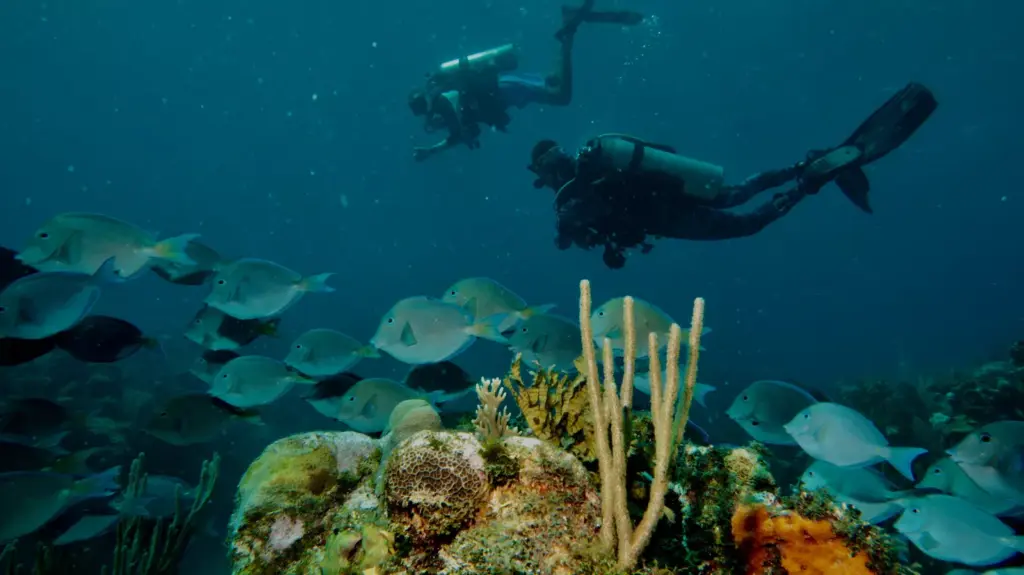
Blue tangs and other surgeonfish are another familiar sight on tropical reefs.
They spend much of their time feeding on algae and moving across the reef, sometimes individually and sometimes in groups.
Their streamlined bodies and distinctive markings make them easy to recognize once you know what to look for.
Blue tangs became particularly famous through popular culture, but seeing one underwater is much more interesting than seeing one on a screen.
Watch how they move between coral formations while feeding, then disappear around the next reef structure.
Angelfish: Colorful Reef Residents
Angelfish are among the most photogenic fish you can encounter in Varadero.
Their bright colors, strong patterns and laterally compressed bodies make them easy to identify once you become familiar with them.
You may find angelfish moving around coral heads, rocky formations and reef edges.
Some species can be surprisingly confident around divers, but the best approach is to remain calm and allow them to continue their normal behavior.
With good buoyancy and a little patience, they can make excellent underwater photography subjects.
Butterflyfish: Small, Elegant and Easy to Miss
Butterflyfish are another group worth watching carefully.
They are often brightly colored and patterned, with narrow bodies that allow them to move easily around coral formations.
Some species are frequently encountered in pairs, and they can be found moving close to coral heads and reef surfaces while searching for food.
Because they can move quickly when approached, avoid chasing them for a photograph.
Instead, settle into a good position, maintain your distance and let the fish come back into view.
Grunts and Snappers: Look Under the Ledges
If you want to find schools of fish, don’t only look out into the blue.
Look underneath coral overhangs, around rocky ledges and beside larger reef formations.
Grunts and snappers can gather in groups around these structures, creating some of the most impressive fish scenes on a relatively shallow dive.
Their silver, yellow and reddish tones can become particularly noticeable when a school turns together in the sunlight.
These fish are also a good reminder that reef diving isn’t just about spotting individual animals. Sometimes the most memorable sight is an entire group moving together.
Trumpetfish: Masters of Disguise
Trumpetfish have one of the most unusual shapes on the reef.
Long, narrow bodies and elongated mouths allow them to blend into coral, sea fans and other reef structures.
They can sometimes be surprisingly difficult to spot because they use the environment around them as camouflage.
When you see one, take a moment to observe rather than immediately swimming closer.
Their behavior and ability to disappear into the reef are part of what makes them such an interesting sighting.
Pufferfish: A Favorite With Divers
Pufferfish are often a favorite with divers because of their distinctive appearance.
They can be found around reefs, rocky areas and sandy sections, depending on the species.
Their large eyes and rounded bodies give them a very different appearance from many of the faster-moving reef fish.
If you encounter one, give it space and let it behave naturally.
There is no need to touch or interact with marine life to have a memorable encounter.
Rays, Turtles and Other Special Sightings
Not everything you see on a Varadero dive will be a reef fish.
With a little luck, you may also encounter other marine animals such as:
• Rays
• Sea turtles
• Lobsters
• Small reef sharks
• Eagle rays
• Other larger reef animals
These encounters are never guaranteed, which is part of what makes them exciting.
A turtle appearing over the reef or a ray gliding across the sand can turn an ordinary dive into one you remember for years.
The best approach is always the same: remain calm, keep a respectful distance and allow the animal to decide where it wants to go.
Where Can You See These Fish in Varadero?
Many of these species can be encountered on the coral reefs around Varadero, including sites such as Playa Coral and Bacunayagua.
Playa Coral
[Internal link: Playa Coral Cuba: Snorkeling & Shore Diving Near Varadero]
Playa Coral is particularly accessible because the reef can be reached directly from shore.
The relatively shallow environment makes it a popular location for beginners, Discover Scuba experiences, snorkeling and underwater photography.
The reef includes coral formations, channels and sandy areas where you can look for different species at different depths.
Bacunayagua
[Internal link: Bacunayagua Diving Cuba: Coral Reefs, Marine Life & Cuba’s Highest Bridge]
Bacunayagua offers another type of reef environment, with coral heads, channels and deeper sections for certified divers.
The site can be a good choice when you want to combine reef exploration with the spectacular landscape above the water.
The standard shore routes begin very shallow and can reach deeper reef areas depending on experience, conditions and the planned route.
You Don’t Need to Be an Expert Diver
One of the great things about reef diving around Varadero is that you don’t need to be an advanced diver to appreciate marine life.
Beginners can encounter plenty of activity on shallow dives.
The key is not depth but observation.
A slow-moving diver who stays calm and maintains good buoyancy may notice far more than someone who spends the entire dive swimming quickly from one location to another.
Look closely at:
• Coral heads
• Sandy channels
• Rocky ledges
• Reef overhangs
• Sea fans
• Open water above the reef
There is often something moving somewhere.
How to Get Better at Spotting Fish
The more you dive, the easier it becomes to recognize where different animals are likely to be.
Instead of only looking for bright colors, learn to look for movement.
A small flicker behind a coral head may be a fish.
A strange vertical shape among sea fans may be a trumpetfish.
A group of silver bodies under an overhang may be grunts or snappers.
And sometimes the best sighting is the one you almost missed.
A few simple tips:
Slow down.
Fast swimming makes it harder to notice smaller animals.
Look in different directions.
Don’t spend the whole dive looking straight ahead.
Check the reef structure.
Overhangs, holes and coral heads can shelter marine life.
Keep your distance.
Fish are more likely to behave naturally when divers don’t chase them.
Practice good buoyancy.
Staying stable lets you observe the reef without touching it.
Underwater Photography: Give the Fish Space
Varadero’s reefs can be excellent places for underwater photography because there are many opportunities to photograph both individual animals and larger schools.
But getting close isn’t always the answer.
Instead:
1. Position yourself carefully.
2. Maintain neutral buoyancy.
3. Avoid touching the reef.
4. Wait for the fish to move naturally.
5. Take the photograph without chasing the animal.
A patient photographer often gets a better photograph than someone who swims directly toward the subject.
Protecting Cuba’s Marine Life
Every fish encounter depends on a healthy underwater environment.
At Scuba Vida, we encourage divers to enjoy marine life without interfering with it.
Our basic rules are simple:
• Maintain good buoyancy.
• Never touch coral or marine animals.
• Don’t feed wildlife.
• Keep equipment secured.
• Avoid kicking the reef with your fins.
• Move slowly and calmly around marine life.
• Give animals enough space to behave naturally.
Responsible diving won’t solve every threat facing coral reefs, but reducing physical damage and disturbance is something every diver can control.
[Internal link: Marine Life & Conservation in Cuba: A Diver’s Guide to Protecting Our Oceans]
[Internal link: Coral Bleaching in Cuba: What Divers Need to Know]
Every Dive Can Be Different
One of the reasons we love diving in Varadero is that you never know exactly what you will see.
You might spend one dive watching a school of grunts beneath a coral ledge.
On another, you may find a colorful parrotfish feeding across the reef.
Then a turtle, ray or eagle ray may appear unexpectedly and completely change the dive.
That variety is part of the experience.
You don’t have to find a rare animal to have a great dive. Sometimes watching ordinary reef fish going about their daily routine is what makes a dive special.
Discover Varadero’s Marine Life With Scuba Vida
Whether you’re making your first Discover Scuba dive or returning to Cuba as a certified diver, our goal is to help you slow down, look carefully and enjoy the reef.
Our local guides know the dive sites around Varadero and can help choose locations according to your experience, interests and the conditions on the day.
If you’d like to explore Varadero’s underwater world with Scuba Vida:
• Send us your travel dates.
• Tell us whether you’re a beginner or certified diver.
• Let us know what kind of diving or marine life interests you.
• We’ll help you choose an appropriate experience.
No rush. No need to chase the fish.
Just take a breath, look around and see what the reef has waiting for you.
When Is the Best Time to See Marine Life?
Marine life can be encountered throughout the year, although the exact conditions and sightings vary.
If you’re planning a diving trip to Varadero, our guide to seasonal conditions can help you decide when to visit.
[Internal link: Best Time of Year to Dive in Cuba]
We look forward to welcoming you underwater.
About Scuba Vida
Scuba Vida is a local dive center based in Varadero, Cuba, offering guided scuba diving, Discover Scuba experiences and snorkeling around the reefs and dive sites of the region.
Our focus is on small-group diving, local knowledge, safety and helping visitors experience Cuba’s underwater world responsibly.