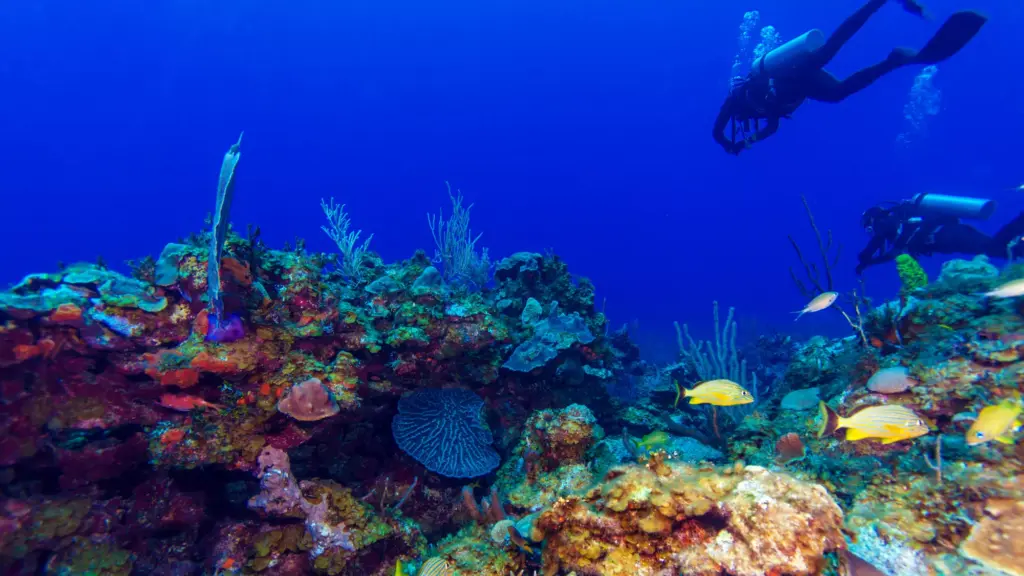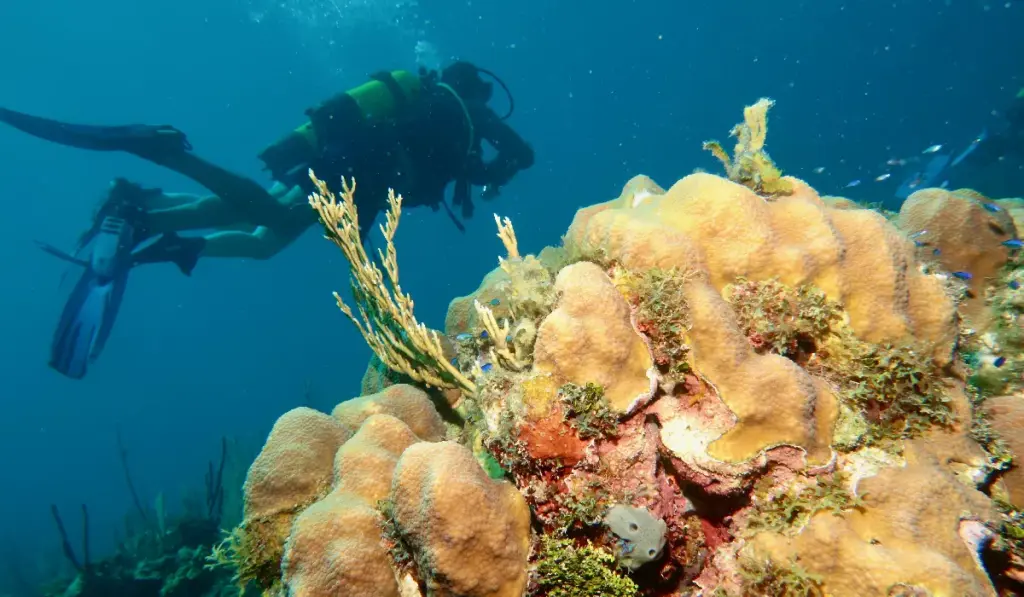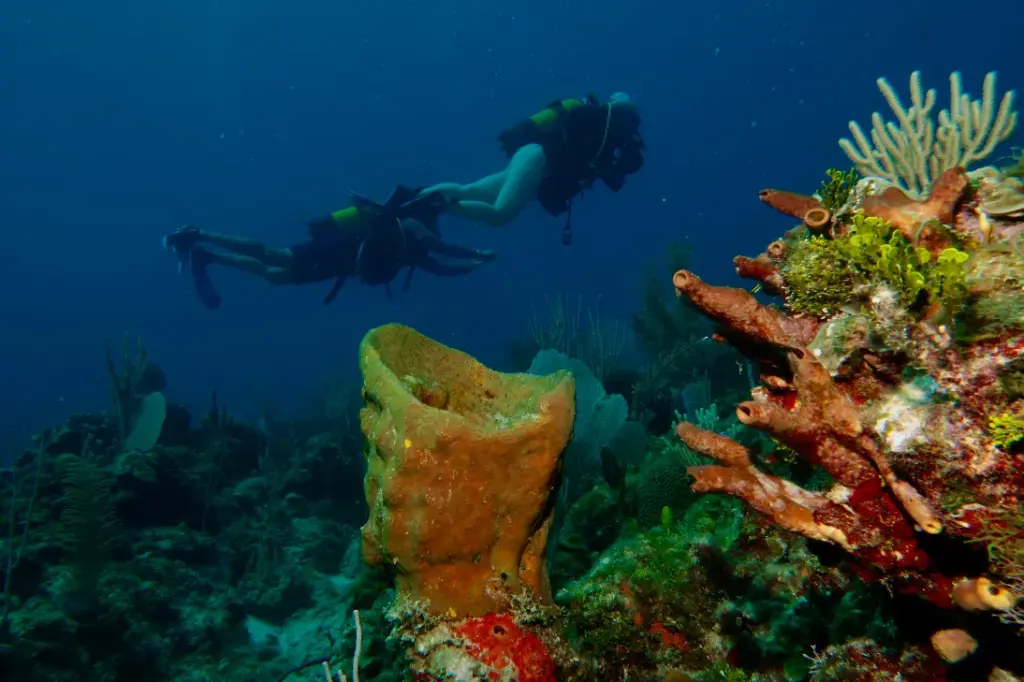
Cuba’s coral reefs are an important part of the country’s underwater environment, supporting reef fish, sponges, corals, turtles and many other marine organisms.
But coral reefs are facing increasing pressure from a warming ocean.
One of the most visible signs of heat stress is coral bleaching — a phenomenon that can turn normally colorful coral colonies white or pale.
For divers visiting Varadero and other parts of Cuba, understanding coral bleaching helps put what you see underwater into perspective.
It also raises an important question:
What can divers actually do to help?
What Is Coral Bleaching?
Coral bleaching happens when corals become stressed and lose or expel the microscopic algae living within their tissues.
These algae, commonly called zooxanthellae, have a mutually beneficial relationship with coral. They provide much of the energy that corals need and contribute to their characteristic colors.
When environmental conditions become stressful, particularly when ocean temperatures remain unusually high corals can expel these algae.
The coral then appears:
• White
• Pale
• Translucent
• Less colorful than normal
Is Bleached Coral Dead?
Not necessarily.
Bleaching is a stress response, not an immediate death sentence.
If stressful conditions improve before the coral is severely damaged, the coral may regain its symbiotic algae and recover. However, prolonged or severe heat stress can lead to coral death, and repeated bleaching can reduce reef resilience.
This distinction is important.
A bleached coral is alive and stressed, not automatically dead.
Why Does Coral Bleaching Happen?
High ocean temperatures are the main driver of large-scale coral bleaching.
However, temperature is not the only stressor.
Corals can also be affected by:
• Excessive sunlight
• Pollution
• Sedimentation
• Poor water quality
• Disease
• Physical damage
• Other environmental stresses
NOAA notes that high temperatures combined with strong sunlight can particularly affect shallow-water corals.
This is why protecting reefs from local damage remains important even though global warming is the largest long-term challenge.
Coral Bleaching and Cuba
Cuba is part of the wider Caribbean reef ecosystem, so its corals are exposed to the same broad oceanographic pressures affecting reefs throughout the region.
Recent global bleaching events have demonstrated how widespread thermal stress can become.
NOAA confirmed the fourth global coral bleaching event in April 2024. Its subsequent assessment found that bleaching-level heat stress affected approximately 84% of the world’s coral-reef area between January 2023 and September 2025, making it the largest global bleaching event recorded to date.
Cuba was not isolated from this regional and global pattern.
NOAA Coral Reef Watch records show bleaching alerts affecting areas of Cuba during the 2024–25 period, including southwestern Cuba.
This does not mean that every Cuban reef is bleached.
Conditions can vary considerably between locations, depths and individual reef communities.
That is one reason local observations are so important.
What About Varadero and Playa Coral?
Varadero’s reefs, including accessible sites such as Playa Coral and other reef areas along the northern coast, experience the same environmental pressures as other Caribbean reefs.
However, it is important not to assume that every coral colony at a particular dive site is experiencing the same level of stress.
Bleaching can vary according to:
• Coral species
• Water depth
• Exposure to sunlight
• Water movement
• Local temperature
• Previous environmental stress
• Individual coral resilience
A shallow coral colony exposed to unusually warm, calm conditions may respond differently from a deeper colony with more water movement.
For this reason, a local dive guide’s observations can add valuable context to what you see underwater.
Why Shallow Reefs Can Be Vulnerable
Many of the shallow reefs popular with divers and snorkelers receive strong sunlight.
Normally, this is essential for photosynthesis by the algae living within coral tissue.
But when temperatures are already unusually high, intense sunlight can contribute to additional stress.
This is one reason shallow reefs can sometimes show visible signs of thermal stress before deeper areas.
It is also a reminder that the shallow coral formations enjoyed by snorkelers and beginner divers deserve careful protection.
Why Healthy Reefs Matter
Coral reefs are much more than colorful scenery for divers.
They provide habitat and shelter for marine organisms and contribute to fisheries, tourism and coastal protection.
For a dive center, reefs are also part of the foundation of responsible marine tourism.
When a diver visits Playa Coral, Bacunayagua or another Cuban reef, they are experiencing an ecosystem rather than simply a collection of rocks and fish.
Protecting that ecosystem benefits both marine life and the communities that depend on healthy coastal environments.
Can Corals Recover From Bleaching?
Yes, some corals can recover.
If temperatures return to normal before prolonged damage occurs, surviving corals can regain their symbiotic algae and gradually return to healthier conditions. Recovery can take weeks, months or longer depending on the severity of the event and the condition of the coral.
But recovery is not guaranteed.
Severe or prolonged heat stress can cause coral mortality.
Repeated bleaching can also leave surviving corals more vulnerable to disease and other stressors.
This is why reef conservation is important even when a reef appears to be recovering.
What Can Divers Do?
Divers cannot control ocean temperatures.
But we can reduce the additional stress we place on reefs.
1. Master Your Buoyancy
Good buoyancy is one of the simplest ways a diver can protect coral.
Avoid:
• Kneeling on the reef
• Standing on coral
• Kicking coral with your fins
• Dragging gauges or hoses
• Holding onto coral to steady yourself
Even accidental contact can break fragile coral.
NOAA specifically recommends that divers avoid touching reefs and stirring up sediment.
2. Keep Your Fins Off the Bottom
Fin technique matters, especially in shallow water.
A poorly controlled fin kick can:
• Break coral
• Disturb sediment
• Reduce visibility
• Cover nearby organisms with sediment
Good trim and buoyancy protect both the diver and the reef.
3. Don’t Touch Bleached Coral
It can be tempting to investigate a white coral colony more closely.
Don’t.
Bleached coral is already stressed.
Touching it can cause additional physical damage.
Look closely, take your photograph and move on.
4. Don’t Collect Coral
Never remove coral, shells or other natural material from a reef as a souvenir.
Reef structures develop over very long periods.
Take photographs, not pieces of the reef.
What About Sunscreen?
This subject requires a little more nuance than the phrase “reef-safe sunscreen.”
There is no universal certification that makes a sunscreen completely harmless to every marine ecosystem.
Research has identified concerns about several UV-filter chemicals and their potential effects on coral and other marine organisms. NOAA recommends considering products without chemicals known to harm marine life and using UV-protective clothing and shade where practical.
For divers and snorkelers, practical steps include:
• Wear a rash guard or UV-protective shirt
• Use shade when possible
• Apply sunscreen well before entering the water
• Consider a mineral-based sunscreen
• Check the active ingredients rather than relying only on the words “reef-safe” on the label
Reducing what enters the water is a sensible precaution.
Respect Marine Life
Coral conservation also means protecting the animals that live around the reef.
During your dive:
• Don’t chase turtles
• Don’t touch animals
• Don’t feed fish
• Don’t handle marine life for photographs
• Give animals room to move
• Avoid blocking their natural path
A good wildlife encounter is one where the animal behaves naturally.
Choose Responsible Dive Operators
Divers can also influence conservation through the operators they choose.
Look for dive centers that:
• Keep groups manageable
• Brief divers about environmental protection
• Encourage good buoyancy
• Avoid unnecessary contact with reefs
• Respect local marine-life rules
• Educate visitors about the environment
• Choose dive sites according to conditions and diver experience
Responsible tourism cannot solve global climate change by itself.
But it can reduce local pressures and help make reefs more resilient.
NOAA emphasizes that reducing local stressors such as pollution and overharvesting can improve a reef’s ability to withstand larger climate-related stresses.
What Should You Do If You See Bleached Coral?
First:
Don’t panic.
Seeing pale or white coral does not automatically mean the entire reef is dying.
Instead:
1. Observe without touching.
2. Take photographs if appropriate.
3. Note the location and approximate depth.
4. Tell your local dive guide what you observed.
5. Follow any local reef-monitoring or reporting program if one is available.
Professional monitoring is much more useful than individual assumptions.
A coral colony can look very different from one season to another, and experienced local divers can provide useful context about what they have observed over time.
Coral Bleaching Is Bigger Than One Dive Site
It is important to understand the scale of the problem.
A diver can protect a coral colony from physical damage.
A dive center can reduce local impacts.
A coastal community can improve waste and water management.
But the long-term future of coral reefs also depends on reducing global greenhouse-gas emissions and limiting ocean warming.
NOAA describes climate change and ocean warming as major long-term threats to coral reefs, while also emphasizing the importance of reducing local stressors.
So responsible diving is not a replacement for climate action.
It is one part of a much bigger effort.
What Scuba Vida Does
At Scuba Vida, we believe that responsible diving starts before we enter the water.
Our approach includes:
Small-Group Diving
Smaller groups make it easier for guides to monitor divers and help prevent accidental contact with the reef.
Reef-Aware Briefings
We explain the environmental conditions and expectations for responsible diving before entering the water.
Good Buoyancy
We encourage every diver, especially beginners to develop buoyancy skills that allow them to stay clear of the reef.
No Touching or Collecting
We encourage divers to observe marine life and coral without touching, feeding or removing anything.
Local Knowledge
Our guides know the local dive sites and can help choose locations according to conditions, diver experience and the interests of the group.
Responsible Site Selection
If conditions at one site are not appropriate, another dive site may provide a better experience and reduce unnecessary pressure on a particular reef.
The Best Thing a Diver Can Do
You don’t need to be a marine scientist to help protect a coral reef.
Start with the basics:
Control your buoyancy.
Keep your hands and fins off the reef.
Don’t chase or touch marine life.
Reduce unnecessary plastic.
Be thoughtful about what you put into the water.
Choose responsible dive operators.
And understand that coral bleaching is a global environmental challenge that cannot be solved by divers alone.
But every diver can choose not to make the problem worse.
Protect Today’s Reefs for Tomorrow’s Dives
Coral bleaching is a reminder that the underwater world is alive — and vulnerable.
The white appearance of a bleached coral colony can be difficult to see, especially for divers who have grown accustomed to colorful Caribbean reefs.
But it is also an opportunity to learn.
The more divers understand about coral ecosystems, the better equipped they are to protect them.
At Scuba Vida, we want visitors to experience Cuba’s underwater world while understanding why it deserves respect.
Every dive is an opportunity to explore.
Every dive is also an opportunity to protect.
Ready to Dive Responsibly in Cuba?
Join Scuba Vida for small-group diving in Varadero with experienced local guides who care about the underwater environment.
Explore Cuba’s reefs, wrecks and marine life while practicing responsible diving from the moment you enter the water.
Contact Scuba Vida to plan your dive in Varadero.
Related Articles
• Marine Life & Conservation in Cuba: A Diver’s Guide to Protecting Our Oceans
• Best Time of Year to Dive in Cuba
• Playa Coral Cuba: Snorkeling & Shore Diving Near Varadero
• Snorkeling vs Scuba Diving: Which Is Right for You in Cuba?
• Top 5 Coral Reef Dive Sites in Matanzas Province, Cuba
• A Beginner’s Guide to Scuba Diving in Varadero