There are dives you remember because they were beautiful.
And then there are dives that stay with you because they combine history, depth, scale and a completely different underwater environment.
The Sletreal is one of those dives.
Known locally by several names, including Sletreal, Sletrea, Eletrea, Ciudadela, La Proa and La Barriga, the wreck is the remains of an oil tanker that suffered a catastrophic explosion at Cárdenas in 2000.
Today, the separated sections offer very different underwater environments near Varadero — from deep wreck structure surrounded by open sand to shallower coral-covered sections that have become part of the reef.
And this is not simply a story we researched.
It is a site we have experienced underwater ourselves.
Scuba Vida Local Insight: The Sletreal is special because it does not feel like one conventional wreck dive. Its different sections offer very different depths and environments, so the right dive depends on your certification, experience, equipment and the conditions on the day.
At a Glance
Feature Sletreal Wreck
Location Cárdenas / Varadero area
Wreck type Oil tanker
Incident January 30, 2000
Main sections Bow, bridge/stern and midsection
Local deepest profile Approximately 50 m
Bridge/stern Approximately 40 m on local profile
Midsection Approximately 16 m
Access Boat
Experience Advanced to technical depending on section
Main attractions Large wreck structure, coral growth and marine life
Best for Experienced divers, wreck divers and underwater photographers
Depths are approximate local dive profiles and can vary by exact route, conditions and operator. The deepest sections require appropriate training, equipment and experience.
The Story of the Sletreal
The Sletreal was a Liberian-flagged oil tanker built in 1983.
On January 30, 2000, while at Cárdenas, Cuba, the vessel suffered a major explosion.
Contemporary maritime records state that the tanker was waiting to load crude oil when the explosion occurred. The vessel broke in two, one section sank, and three crew members were killed.
The exact circumstances of the explosion were investigated at the time. An International Maritime Organization document records that the explosion was thought to have been caused by crude-oil vapors.
The Sletreal was ultimately a total loss.
Today, its separated remains have become an unusual underwater environment where shipwreck structure and marine life meet.
Three Sections, Three Different Dives
The Sletreal is best understood as a multi-section wreck system.
The three sections commonly described by local divers are:
1. The Bow
2. The Bridge and Stern
3. The Midsection
Each offers a very different experience.
1. The Bow: Deep, Isolated and Impressive
The bow is the deepest and most demanding section in the local Sletreal dive profile.
Dive Profile
• Local maximum depth: approximately 50 m
• Environment: open sand surrounding the wreck
• Access: boat
• Level: advanced to technical depending on the planned depth
Descending toward the bow can be an extraordinary experience.
The large structure rises from the surrounding seabed, creating a dramatic contrast between steel and open sand.
At depth, the scale of the wreck becomes particularly apparent.
This is not a beginner wreck dive.
A profile approaching 50 m is well beyond standard Open Water recreational diving and requires appropriate depth training, gas planning, equipment and experience.
Published dive reports describe the Sletrea at somewhat different depths, including approximately 40 m for the bow. For that reason, divers should confirm the exact planned depth and route with their local operator before the dive.
Why the Deep Bow Is Special
Deep wreck diving creates a very different atmosphere from a shallow reef dive.
The surrounding water can feel enormous.
The wreck can appear isolated against the seabed, and the scale of the structure becomes one of the main attractions.
For experienced deep divers, this combination of depth, open space and large wreck structure is what makes the bow so memorable.
But depth should never be treated as the objective by itself.
The correct dive is the one that matches your training, experience, equipment and current conditions.
2. The Bridge and Stern: Wreck Meets Reef
The bridge and stern offer another dramatically different profile.
Dive Profile
- Local maximum depth: approximately 40 m
- Reef top: approximately 16 m
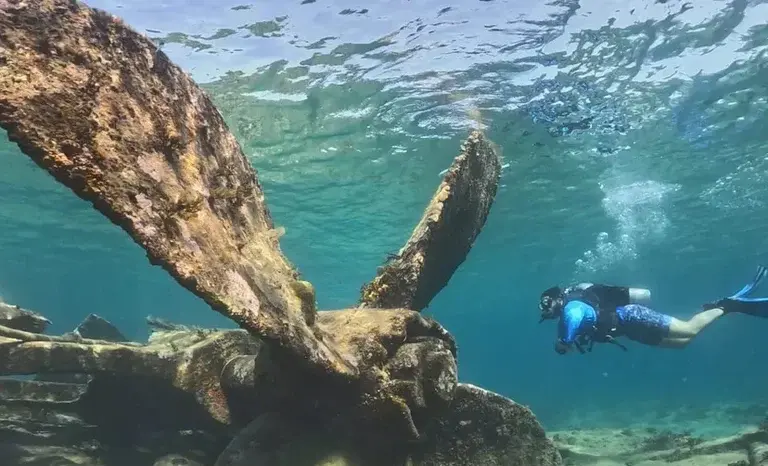
- Highlights: large propeller and coral-covered superstructure
- Level: advanced depending on the planned route
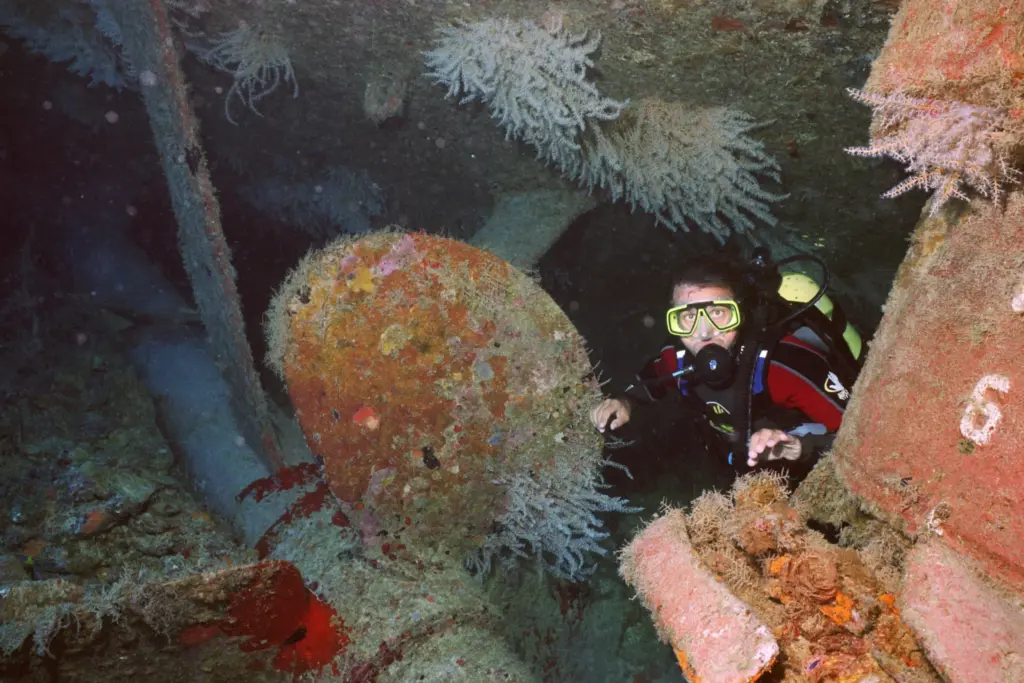
Here, the wreck increasingly becomes part of the reef environment.
Coral and other marine growth cover sections of the structure, while fish move around the metal framework.
One of the most recognizable features is the large propeller.
The combination of wreck structure, coral growth and depth makes this section particularly attractive for underwater photography.
Published diving material has described the bridge and stern at around 30 m, which is another reason to confirm the exact route and depth with the local dive team.
3. The Midsection: A Living Reef Channel
The midsection is completely different again.
Dive Profile
• Depth: approximately 16 m
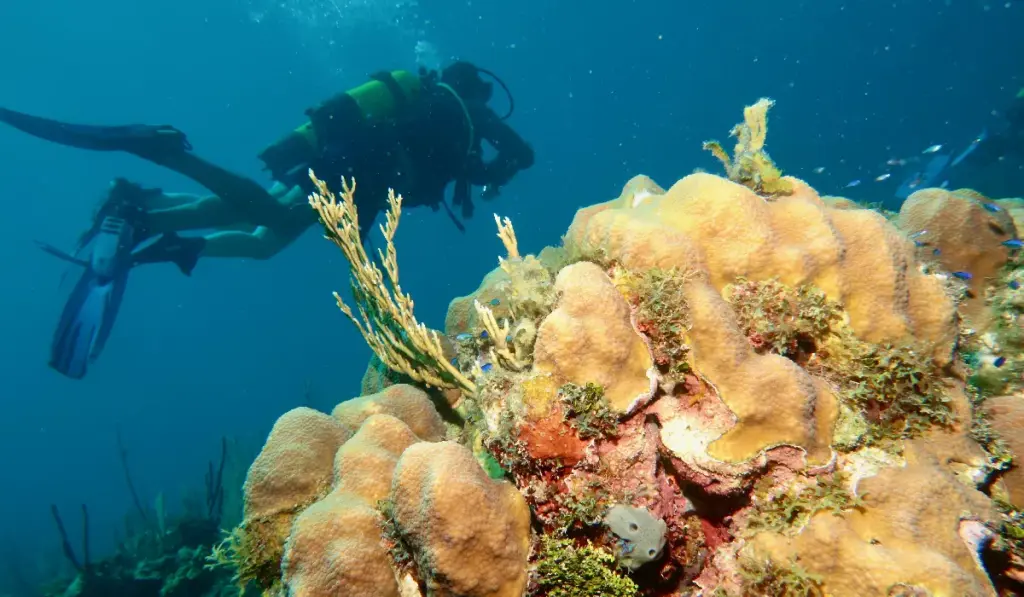
• Environment: sandy channels and coral reef
• Character: shallower and more relaxed
• Level: depends on the exact route and conditions
Instead of feeling like a deep wreck expedition, this section can feel much more like a reef dive.
Sandy channels run between coral formations, while the remaining wreck structure becomes part of the underwater landscape.
This is where the transformation of the Sletreal becomes particularly obvious.
What began as a working tanker has become part of an underwater ecosystem.
From Shipwreck to Artificial Reef
A wreck provides hard surfaces where corals, sponges and other organisms can establish themselves.
Over time, fish can also use the structure for shelter, feeding and hunting.
At the Sletreal, this process is particularly interesting because the wreck is divided into different sections and depths.
You can experience:
Deep wreck structure
→
Coral-covered steel
→
Shallower reef channels
The result is a dive environment that changes considerably depending on which section you visit.
Marine Life Around the Sletreal
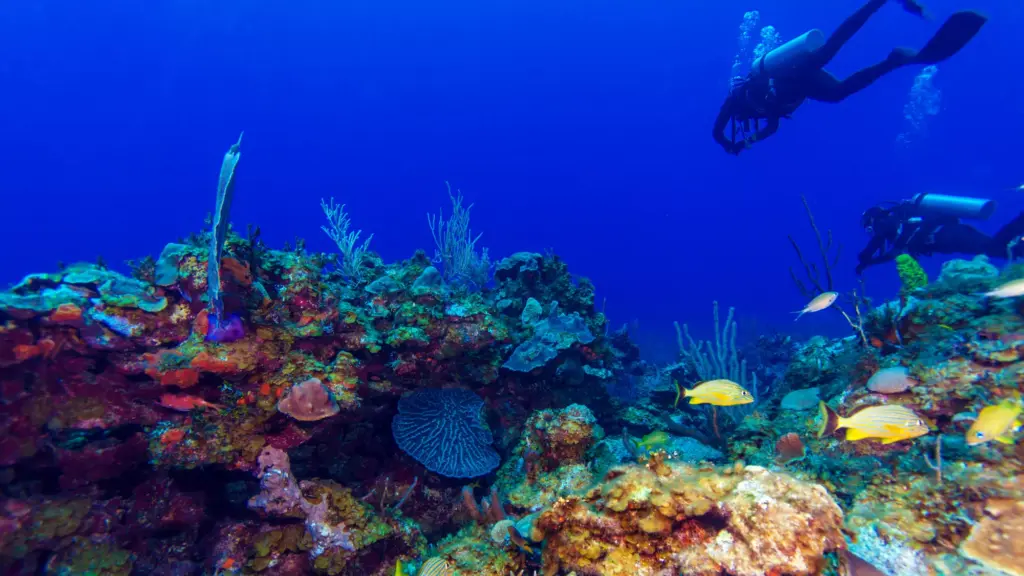
The marine life varies between sections, but the wreck provides structure that can attract and shelter reef species.
Depending on the site and conditions, you may encounter:
• Barracuda
• Groupers
• Snappers
• Grunts
• Moray eels
• Tropical reef fish
• Coral and sponges
• Larger pelagic species on deeper routes
The deeper sections can feel very different from the shallower reef.
Around the bridge and stern, schools of fish can make the wreck structure particularly impressive, while the midsection can feel more like a conventional coral-reef environment.
Published accounts of diving the Sletrea have described large schools of fish around the wreck, including batfish and Creole wrasse.
Related Reading
Fish You’ll See When Diving in Varadero, Cuba
What Makes the Sletreal Different?
Many Varadero wrecks are relatively shallow.
The Sletreal is different because its separated sections allow for very different levels of diving.
You can have a shallow reef-style experience around the midsection or plan a much deeper wreck dive on one of the deeper sections.
That range is unusual.
It also means that the Sletreal should never be treated as a single standard dive.
The section matters.
The depth matters.
And the diver matters.
Who Should Dive the Sletreal?
There is no single experience level for the entire wreck system.
The appropriate level depends on which section you plan to dive.
Shallower sections
Experienced recreational divers may be able to explore the shallower midsection when the route and conditions are appropriate.
Deeper sections
The deeper bow and bridge/stern require significantly more experience.
Divers should have:
• Appropriate depth certification
• Strong buoyancy control
• Experience with deeper dives
• Excellent gas management
• Appropriate equipment
• A clear dive plan
• Experience with the expected conditions
If the planned profile approaches technical depths, appropriate technical training and gas planning are essential.
The Sletreal should never be treated as a normal sightseeing dive simply because it is located near Varadero.
Do You Need Wreck Certification?
Not necessarily for every external wreck dive.
The answer depends on what you plan to do.
Exploring the outside of a wreck is very different from entering it.
If a dive involves an overhead environment, penetration requires specific training, procedures and equipment.
For the Sletreal, much of the attraction can be experienced without penetration.
The exterior structure, propeller, coral growth, marine life and dramatic depth provide plenty to explore.
Dive Planning and Gas Management
Deep wreck diving requires more careful planning than a shallow recreational dive.
Before entering the water, divers and guides should establish:
• Maximum depth
• Planned bottom time
• Gas requirements
• Turn pressure
• Descent and ascent procedures
• Emergency procedures
• Buddy or team arrangements
• Weather and sea conditions
Nitrox can be useful on appropriate shallower profiles, but nitrox does not automatically make a deep dive safer or appropriate.
Gas selection must match the planned depth and the diver’s training.
For the deepest Sletreal profiles, divers need to use the gas strategy and equipment appropriate to their certification and planned decompression profile.
A Photographer’s Perspective
The Sletreal offers several very different photographic environments.
The Bow
The deep bow is suited to dramatic wide-angle images.
The combination of:
• Large steel structure
• Open sand
• Blue water
• A diver for scale
can create powerful photographs.
Bridge and Stern
The coral-covered superstructure and large propeller provide excellent subjects.
A diver positioned beside the wreck can also show its scale.
Midsection
The shallower reef environment offers opportunities to photograph:
• Reef fish
• Coral formations
• Sandy channels
• Wreck structure
• Marine life using the wreck as habitat
Because the sections are so different, returning to the Sletreal can produce completely different images.
A Wreck With a Story
There is something powerful about seeing a vessel that has a documented human history.
The Sletreal was once a working tanker.
In 2000, an explosion changed its fate forever.
Today, its remains form an underwater environment inhabited by marine life.
The steel structure tells one story.
The reef growing around it tells another.
And every diver experiences a different version depending on the section, depth and conditions.
Why the Sletreal Matters
The Sletreal offers something different from the typical shallow reef experience around Varadero:
Depth.
Scale.
History.
Marine life.
Transformation.
It shows how a human-made structure can become part of an underwater ecosystem over time.
But its greatest attraction is not simply that it is deep.
It is the fact that one wreck system can offer such different diving experiences.
Responsible Wreck Diving
Historic wrecks should be treated with respect.
During your dive:
• Maintain good buoyancy
• Do not remove anything from the wreck
• Avoid touching coral
• Do not climb on wreck structures
• Avoid sharp or unstable areas
• Do not enter confined spaces without appropriate training
• Keep equipment streamlined
• Respect marine life
• Follow your guide’s route and instructions
The wreck is both an underwater habitat and a piece of maritime history.
Leave it for the next generation of divers.
Sletreal vs Damuji
Feature Sletreal Damuji
Depth Up to ~50 m on local deepest profile Approximately 5–12 m
Access Boat Shore / boat depending operator
Experience Advanced to technical depending section Open Water on appropriate routes
Wreck condition Multiple separated sections Scattered remains
Reef growth Extensive Extensive
Main attraction Depth, scale and multiple profiles Accessibility, history and shallow reef
Photography Deep wreck + reef Shallow wreck + reef
The two wrecks offer very different experiences.
Damuji is a more accessible introduction to wreck diving near Varadero.
Sletreal is the more demanding option for experienced divers looking for depth and large-scale wreck structure.
Related Reading
Wreck Diving in Cuba: What You Need to Know Before You Go
Plan Your Sletreal Dive
If you are interested in diving the Sletreal, tell your dive operator:
• Your certification level
• Number of logged dives
• Your recent diving experience
• Your deepest recent dive
• Whether you have wreck-diving experience
• Whether you have deep or technical training
• Your equipment and gas configuration
• Your travel dates
This allows the dive team to determine which section is appropriate.
And remember:
The deepest section is not automatically the best section.
A shallower route may offer more time, more marine life and better conditions for photography.
Dive the Sletreal With Scuba Vida
At Scuba Vida, we believe dives like the Sletreal deserve more than a depth number.
The history of the wreck, the different sections, the marine life and the conditions all form part of the experience.
Whether you are interested in the deeper bow, the coral-covered bridge and stern, or the shallower midsection, we can help determine which profile fits your experience.
Tell us your certification, recent diving experience and travel dates, and ask us about the Sletreal.
Related Articles
• Wreck Diving in Cuba: What You Need to Know Before You Go
• Diving the Damuji Wreck: History, Marine Life & Shore Diving Near Varadero
• The Best Dive Sites in Cuba: A Guide to Varadero & Beyond
• Diving Between Matanzas and Havana: Cuba’s Wild North Coast
• Fish You’ll See When Diving in Varadero, Cuba
About Scuba Vida
Scuba Vida is a local dive operation based in Varadero, Cuba, offering guided scuba diving, snorkeling and customized diving experiences along the Cuban coast.
Our approach is simple: local knowledge, small groups, responsible diving and choosing the right site for the conditions.