
- Englishen
- Deutschde
- Españoles
- Françaisfr
OUT OF YOURSELF AND INTO THE TEAM
One of the most surprising things about scuba diving isn’t just what you see underwater, it’s how your body feels.
Many divers describe it as:
👉 floating effortlessly, moving slowly, breathing deeply
It’s not exactly zero gravity, but it’s close enough to feel like a form of natural anti-gravity therapy.
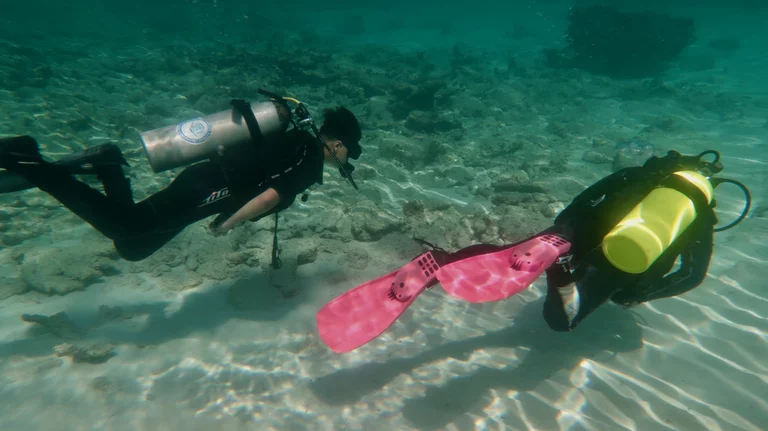
When you achieve neutral buoyancy, your body is no longer fighting gravity in the usual way.
Instead of:
•standing
•sitting
•carrying your own weight
You’re:
✔ suspended in water
✔ balanced in all directions
✔ moving with minimal effort
This reduces:
•joint pressure
•muscle strain
•physical tension
👉 It’s one of the few environments where the body can truly “let go.”
Underwater breathing is naturally:
•slower
•deeper
•more controlled
This creates:
✔ better oxygen efficiency
✔ reduced heart rate
✔ calmer nervous system
Many divers notice that after a dive, their breathing remains slower, a sign of deep relaxation.
RELATED LINK:
Unlike high-impact sports, diving uses:
•slow fin movements
•core stability
•subtle body adjustments
Your muscles are always working, but softly.
👉 It’s closer to controlled movement than exercise, similar to yoga or swimming.
Water applies gentle pressure to the body, which can:
•improve circulation
•support muscles
•reduce minor swelling
Combined with buoyancy, this creates a unique sensation:
👉 your body feels both supported and weightless at the same time.
Because movement is slow and breathing is controlled:
•muscles relax
•tension decreases
•the body enters a calm state
Many divers describe it as:
👉 “the most relaxed I’ve ever felt physically.
Now maybe you are wondering:
Curious how diving feels for your body?
Send us a message with your travel dates and experience level.
We’ll guide you through a safe and relaxed first dive, step by step 💙
Recommend reading :